
Our Insights
Morgan Stanley’s latest updates on markets, economies, global trends and more.
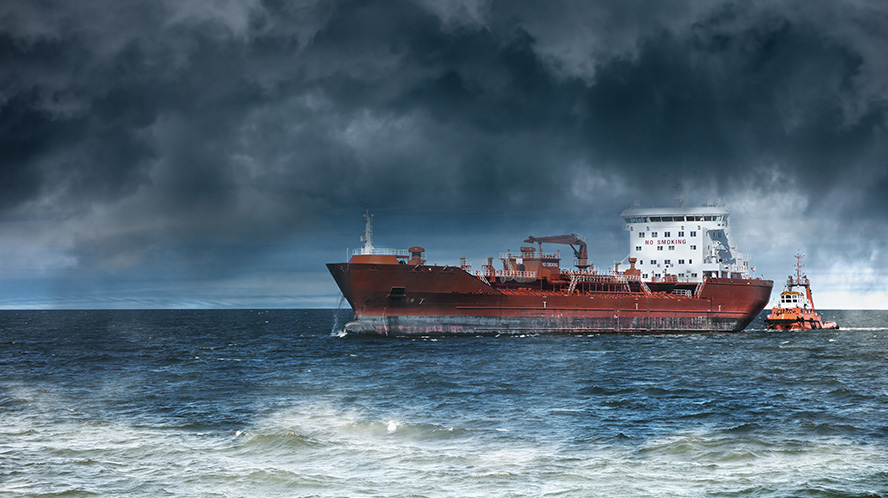
Iran, Oil and the U.S. Economy
The Iran war’s oil shock is rippling across inflation, rates and risk assets—and the 2026 midterms may hinge on how long higher crude prices persist.





Morgan Stanley Institute
Signal that moves capital. The Morgan Stanley Institute delivers integrated insights on the defining questions for financial decision makers.

Thoughts on the Market Podcast
Oil Markets Are Even Tighter Than They Appear
Transcript
Welcome to Thoughts on the Market. I’m Martijn Rats, Morgan Stanley’s Global Commodities Strategist. Today – an update on the global impact on the Strait of Hormuz shutdown.
It’s Tuesday, March 24th, at 3pm in London.
More than three weeks into the Iran conflict and the Strait of Hormuz disruptions, the numbers are striking. Normally, around 35 oil tankers leave the Gulf each day. Today, that number is closer to zero to two. That amounts to a shock. In fact, we estimate this event has disrupted roughly 20 percent of global oil supply – double the scale of the Suez crisis in the 1950s.
Now, you might think: can’t the system adapt? Can’t oil just flow another way? At first, oil kept moving by being stored on ships already inside the Gulf. But that buffer is now full. Floating storage has surged in the area to over 120 million barrels, and new loadings have effectively stopped. Once storage is filled, producers have no choice but to cut output – and that’s exactly what we’re seeing. About 10 million barrels per day of upstream oil and gas production is now offline.
Now once we reach this point, the Hormuz closure becomes a real supply loss. There are some partial workarounds. Pipelines that bypass the Strait. Strategic reserve releases. Possibly, naval escorts at some point to help ships move along. But unfortunately, none of these fully solve the problem. Even after accounting for all these offsets, the market still faces a shortfall of around 10 to 12 million barrels per day. Now, that is more than three times the supply shock markets feared in 2022, when Brent oil prices surged to around $130 a barrel.
And beyond crude oil, the supply strain is showing up even more in refined products. Now, how so? By comparison, crude oil is still flexible. One barrel can sometimes be substituted with another. But refined products – like jet fuel or petrochemical feedstocks – are much more specific. They’re harder to replace quickly. And we’re already seeing acute shortages.
Europe relies on imports for about 37 percent of its jet fuel needs, and those flows have now declined sharply. Middle East exports of naphtha, a key input for plastics and chemicals to destinations in Asia, have fallen from about 1.2 million barrels per day to almost zero. And in shipping hubs like Singapore, marine fuel prices have surged dramatically, with some fuels exceeding $250 per barrel. Once fuel shortages hit logistics, the disruption spreads beyond energy to affect the movement of goods across the economy.
So where does this leave us? We envision two broad scenarios. First, a reopening. Even if the Strait reopens relatively quickly, say within one to two weeks, the system doesn’t just snap back. There’s what we call an air pocket in the system – a gap created by delayed shipments, empty inventories, and disrupted supply chains. In that case, oil prices are still likely to stay elevated throughout the second and third quarters, rather than quickly returning to pre-crisis levels which were about $70 per barrel at the time.
A second scenario would be a prolonged closure. If the disruption continues, the market shifts from substitution to rationing. And rationing means demand has to fall. Historically, that only happens at much higher prices – typically in the range of $130 to $150 per barrel.
Now given all this, we’ve revised our base case forecasts higher. We now expect Brent oil prices to average around $110 per barrel in the second quarter, easing only slightly to $90 in the third and $80 by the fourth quarter. But it’s key to realize that reopening the Strait is not the same as repairing the system. This supply chain shock to the oil market will take time to unwind.
Thanks for listening. If you enjoy the show, please leave us a review wherever you listen and share Thoughts on the Market with a friend or colleague today.

Asia’s Energy Dependence Meets a Narrow Strait
Transcript
Welcome to Thoughts on the Market. I’m Mayank Maheshwari, Morgan Stanley’s research analyst covering energy markets in India and Southeast Asia .
Today: how disruptions linked to Iran and the Strait of Hormuz are creating energy-related disruptions across Asia.
It’s Monday, March 23rd, at 8am in Singapore.
To understand the scale of the impact, let’s start with a simple fact: about a quarter of Asia’s energy – that is oil, liquefied natural gas, and propane – comes from the Middle East, much of it flowing through a single chokepoint, the Strait of Hormuz. Any disruption here affects more than just oil prices. It also hits power generation, industrial output and even food supply chains across the region.
Asia hasn’t seen a true energy access shock in over 50 years. So that makes this moment very critical. And with oil around $100 per barrel, stress is building in the system. Diesel margins are double pre-conflict levels. Jet fuel premiums have nearly doubled. And Dubai crude – normally cheaper than Brent historically – is now trading at a premium of more than $20 per barrel. This kind of price move signals tightening supply chains.
Asia’s dependence on [the] Middle East runs deep. Refiners source up to 80 percent of crude from the region, and 30–40 percent of LNG imports originate there. For major economies like India and China, roughly 40–50 percent of oil demand passes through Hormuz. It’s a critical energy highway. And when flows slow, the entire system backs up.
Inventories may look like a buffer. Asia holds around 65–70 days of crude. But the system reacts sooner than waiting to run out. Governments are already rationing energy, industries are cutting LNG and LPG usage, and export restrictions are limiting downstream production of fuels. The tightening has already begun.
The real pressure point may not be oil, but natural gas – particularly LNG, as Qatar, which is a big supplier of Asia's LNG, has seen infrastructure damage. Asia accounts for about half of global LNG consumption, with up to 40 percent secured from the Middle East. Unlike oil, LNG has very limited buffers; in number of days, and not in months.
This is where the story extends well beyond energy. Around 25 million tons per year of petrochemical capacity has been impacted, along with roughly 10 million tons of fertilizer production. Prices for key materials like polymers have risen 15–25 percent in just a few weeks, and the premiums are still rising. These inputs feed into everyday products—from cars and electronics to packaging and agriculture. Even basic services are affected, with cooking gas shortages hitting restaurants in parts of Asia.
Policymakers are responding, but options are limited. Around 100 million barrels of crude has been released from reserves. Countries are securing higher-cost LNG cargoes. And many are turning back to coal for reliability despite environmental trade-offs.
Ultimately, the longer this disruption persists, the more pressure builds across energy, power, chemicals, and food systems. And in a region as interconnected and import-dependent as Asia, those ripple effects spread quickly – and widely.
Thanks for listening. If you enjoy Thoughts on the Market, please leave us a review wherever you listen and share the podcast with a friend or colleague today.
Sign up to get Morgan Stanley’s Five Ideas newsletter delivered weekly to your inbox.
Subscribed!
Thank you for subscribing to our blog newsletter. Stay tuned to hear about Morgan Stanley ideas!