
Client Success Stories
Bloom Energy: Powering the AI Economy
The AI boom is driving unprecedented demand for electricity—and reshaping how power is delivered. In this Blueprint episode, Bloom Energy Founder and CEO KR Sridhar shares how the company is enabling speedy on-site power for data centers and critical infrastructure. Partnering with Morgan Stanley, the company raised capital by translating its innovation in technology and energy into a clear investor proposition, which supported its next phase of growth.
KR Sridar:
When you think about the AI boom, for the first time in human history, we are manufacturing intelligence.
And those data centers consume more power than the biggest refineries in the world.
When you need gigawatts worth of power, the size of some small nation’s worth of power, coming into one single data center, the electric grid was not designed for that.
And that's where Bloom comes in.
Sridar:
What we do at Bloom Energy is we take a molecule, whether it's biogas, natural gas, hydrogen, and, without combusting it, we extract the chemical energy in that molecule to make electricity.
And because we don't burn, there is no air pollution. It requires no water and it makes no noise. You can locate it right where you need the electricity.
And today, you can find our Bloom Boxes in almost all segments of commercial and industrial customers.
In the very early days, when I had to go make a pitch about this to venture capitalists,
we had to just completely educate them from the basic understanding to get the company funded.
It was around 2007 that we were looking for funding and our early investors had a great relationship with Morgan Stanley.
Skip Grow:
A lot of investors weren't sure which box to put Bloom in. Is it a technology company? Is it a power company? In this case, using bankers who understood both technology and power, allowed us to best communicate that story to investors.
We were able to help them raise capital at the asset level, which allowed them to offer to their customers a lease or a power purchase agreement solution rather than an upfront capital cost.
We have been a tax equity provider for them for a number of years, and we became a customer as well x several years ago.
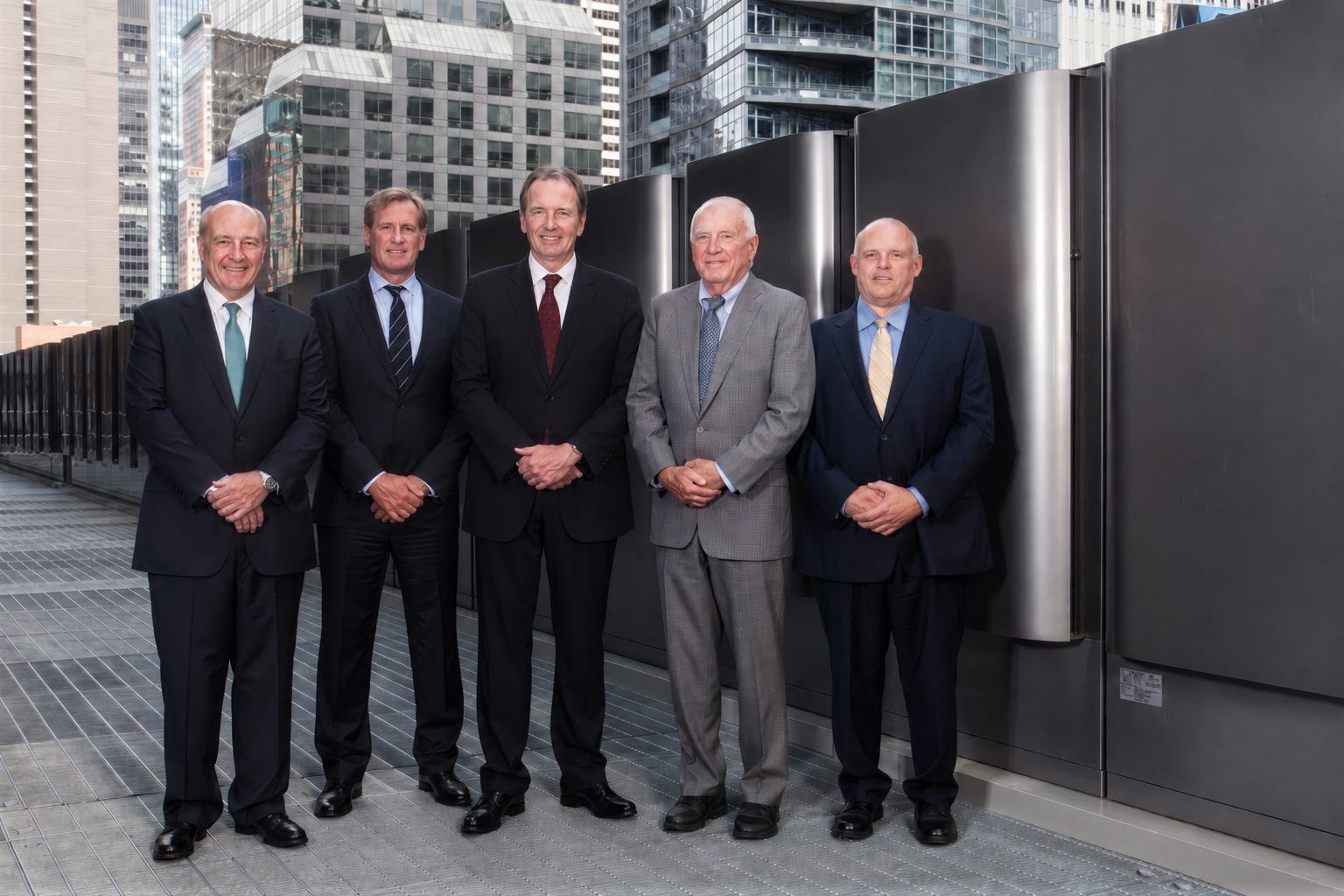
We installed Bloom servers in our Purchase, New York facility as well as our headquarters here in Manhattan.
Sridar:
Through that customer experience, they got to have much greater knowledge of what this product and technology was capable of doing.
Being a private company and then transitioning to a public company is a huge transition.
And what you really need is a financial partner who understands your technology, who understands the energy sector, who understands the electricity sector, and knows why this disruption in an industrial age sector can happen with a technology minded company.
Stephen Byrd:
Morgan Stanley was the lead on the IPO of Bloom Energy and so me and my team really were thinking through not just where the company was today but importantly, as we fast forwarded to much greater scale, where were they going to be? And we liked what we saw in terms of an incredibly large market with minimal competition, with a product from Bloom Energy that was very efficient, very elegant, and with the potential to drop in cost a lot.
Sridar:
It took Steven to really understand it and articulate this to everybody. And he also realized the role that Bloom could play as an on-site power in a very disruptive manner.
Now with the AI boom, that's our big growth area.
Byrd:
So as these data center developers are eagerly looking for power, there are very few options that can be put in place very quickly. Bloom Energy's fuel cells can be installed in a couple of months. That's very rare. And what we're seeing now is incredibly rapid growth at Bloom.
Grow:
As they grow, their needs change and we're able to provide those different services according to their needs.
We were there with private equity, we were there with direct investment, the IPO, as well as private wealth management.
Byrd:
Bloom Energy is sometimes thought of as an overnight success, but it really hasn't been. It's the culmination of a lot of work. But the last year or two have been really transformative.
The future for Bloom Energy, in my opinion, is very exciting.
Sridar:
We set out Bloom with a bold mission statement of being accessible, affordable and abundant electricity for everybody on the planet.
We are prepared for the challenge and we’ll grow as fast as we can.
We want to become more productive, more profitable, and more useful to humanity.
This is where we see the future going.
Watch and subscribe:

The Blueprint for Bloom Energy
-
Lowering Barriers to Energy Adoption
By enabling power purchase agreements and structuring tax equity transactions, Morgan Stanley helped make Bloom Energy’s systems more accessible—allowing customers to adopt on-site power solutions while reducing upfront costs and capturing available incentives.
-
Positioning Bloom Energy for Public Markets
Morgan Stanley helped investors understand Bloom Energy’s unique value proposition in the context of the AI boom, supporting its IPO and subsequent capital raising.
The longstanding relationship we had with Morgan Stanley across various aspects of our business—from being an investor to a customer, and helping us with multiple financings and tax equity—gave them a great understanding of the business.

More Behind the Story
A closer look at the financing strategies and integrated capabilities that supported Bloom Energy’s growth.

Tax Equity Financing
Morgan Stanley helped convert tax credits tied to Bloom Energy projects into upfront financing by bringing in investors who could use those credits, effectively monetizing those incentives for customers.

Flexible Customer Financing
Through asset-level financing, Morgan Stanley enabled Bloom Energy to offer power purchase agreements and leasing structures, allowing customers to deploy systems without significant upfront capital investment.

End-to-End Capital Support
From early funding and IPO execution to structured financing and ongoing capital markets support, Morgan Stanley supported Bloom Energy across multiple phases of growth.
Building the Foundation for Long-Term Growth
Bloom Energy’s relationship with Morgan Stanley began during its early growth phase, following an introduction by Jack Wadsworth, Asia Emeritus Chairman at Morgan Stanley.
Over time, the firm’s investment banking team, including Skip Grow and Ray Spitzley, supported the company’s expansion—from early financing and partnerships to its transition to the public markets. The installation of Bloom Energy fuel cells at Morgan Stanley sites further reflects a long-standing partnership.
Connect With Us
Have a question about the series or want to connect with our team? Email us directly.
Watch More Blueprint Episodes
CEO Steve Huffman shares why going public aligned ownership with the people who built Reddit.
View
video Transcript
Transcript

Figma’s rise didn’t happen overnight.
Follow CFO Praveer Melwani and his Morgan Stanley team who...
View
video Transcript
Transcript

What We Do
Discover the Power of Integrated Solutions
For you or your company, advice and guidance in capital raising, wealth optimization, investing and workplace solutions are here when you need it—supported by experts who make every step seamless.

Private Wealth Management
Expert guidance in tax optimization, corporate cash management, estate planning and more.

Investment Banking & Capital Markets
Market expertise that helps companies go public, raise debt and equity, pursue M&A and accelerate their next stage of growth.

Investment Management
Public and private market strategies that help companies make the most of their capital and investors seeking long-term performance.

Morgan Stanley At Work
Empower your employees—from equity compensation to financial wellness—supporting a stronger, more engaged workforce.
The preceding content was informational only and is not an offer to buy or sell or a solicitation of any offer to buy or sell any security/instrument or to participate in any trading strategy. Participating in a new issue/syndicate is subject to availability. IPOs are highly speculative and may not be appropriate for all investors because they lack a stock-trading history and usually involve smaller and newer companies that tend to have limited operating histories, less- experienced management teams, and fewer products or customers. Also, the offering price of an IPO reflects a negotiated estimate as to the value of the company, which may bear little relationship to the trading price of the securities, and it is not uncommon for the closing price of the shares shortly after the IPO to be well above or below the offering price. Opinions expressed by the client speaker are solely their own. All opinions are subject to change without notice.
©2026 Morgan Stanley CRC #5552403