Hard Lessons: Morgan Stanley’s Lauren Hochfelder
E3
•
February 2, 2026
Watch, Listen and Subscribe:

E3 • February 2, 2026
In this episode of Morgan Stanley’s Hard Lessons, Lauren Hochfelder, Global Head of Real Assets at Morgan Stanley, speaks with Chief Client Officer Mandell Crawley about her out-of-consensus calls and the lessons learned from those transformative convictions. Tune in to hear her revisit an industrial real estate call that got ahead of e-commerce trends, and an investment that led to a hard rethink of office space that led to a well-timed portfolio pivot. She explains why pockets of dislocation are more important than location in choosing real estate investments aligned to the future.
Lauren Hochfelder: And so when you underperform, it it's painful. But I'm grateful that we had that experience where we stubbed our toe because that caused us to really, you know, dig deep on the sector and on ourselves to understand, How did this– how did we get this wrong? And in turn, pivot our whole portfolio. I mean, we took our office exposure down by two thirds, and that then led to enormous outperformance. So, we were able to apply that lesson in a way that I think yielded, you know, phenomenal results later.
Narrator: From Morgan Stanley, this is Hard Lessons where iconic investors reveal the critical moments that have shaped who they are today. You’ll hear about two out of consensus calls: one that was on the money and one that… wasn't. Today on the show, Lauren Hochfelder, Global Head of Real Assets at Morgan Stanley Investment Management. Lauren oversees a global team with over $78 billion in assets under management focused on real estate, infrastructure and credit assets. She sat down with Mandell Crawley, Morgan Stanley's Executive Vice President and Chief Client Officer.
Mandell Crawley: So, we're here to talk about two out of consensus calls that you made. One that really worked, you know, you knocked it out of the park, and the other that didn't go so well. I don't know if that makes you nervous about it, but–
Lauren Hochfelder: Who doesn't like talking about their mistakes?
Mandell Crawley: So we're going to talk about the win, and then we're going to talk about, you know, one that went, um, against you. Set the scene for us, let's talk about one of your biggest wins.
Lauren Hochfelder: What we do as investors is generally try to find pockets of mispricing. So almost by definition, if we're doing our jobs well, things are at least partially out of consensus. One of my favorites is you go back to the early 2010s, and we developed really strong conviction that e-commerce was going to grow rapidly and in turn, be a really powerful tailwind to industrial real estate. So, to warehouses and in turn be a really negative headwind to retail real estate. And, you know, sitting here today, it's probably pretty obvious to us that in fact, e-commerce has taken hold and it's been massive. But let me tell you, it didn't back then. We're talking when e-commerce penetration rates were circa 4% and investing in real estate, more than half of it was owning malls and office buildings. Warehouses were boring beta bets. They, you know they were flat income streams, no real rental growth. But we, we saw things differently, and we looked at early shifts in how our tenants were using space. And probably most fun, we looked at shifts in our own behaviors as consumers. Even as the US team maybe developed conviction, we were talking to our European colleagues and they're saying in Europe people like to go, you know, try on their clothing and they want to, you know, sure feel the peach. And yeah. And then our colleagues in Shanghai were like, you're all crazy, like, why would you ever go to a store for anything, right? Because e-commerce in Shanghai had just— you know—they almost skipped the mall phase. So we started really buying and building the warehouses that help get those goods to our front doors every day. We invested well ahead of what ended up being, you know, a doubling, a tripling of values on an unlevered basis. And this was a call that went, you know, really well.
Mandell Crawley: So when did you know that you were on the right path, that you had the gut call, but you, you were starting to see enough evidence to confirm that you were going to be on the right side of this thing. When did you know that?
Lauren Hochfelder: There were a few steps along the way. On the data side, human behavior was shifting faster than the supply chains could keep up. So what do I mean by that? You saw e-commerce as a percentage of industrial leasing go from, you know, 5% to 20% over not that long of a period of time. But interestingly, you could see why maybe some, others missed it because retail sales were growing at, you know, circa 4% a year, and in store sales were growing at 3% to 4% a year. So, there were folks who were saying, they're growing in tandem, this e-commerce thing, it's not eroding market share, right. The in-store sales are still holding up, you know, almost in lockstep. But what we looked at is that may be, but e-commerce sales are growing at 20%. But I'll tell you, there were, there were moments along the way where you saw the rest of the industry not necessarily agree with us. I mean, I remember being at this dinner with some of my, you know, greatest industry colleagues, sort of competitors and, you know, peers. This was the age of the creative office. So, this was sort of these big office buildings. And every real estate guy thought he was like Basquiat, right? Like with these fabulous buildings. And, you know, they're talking about transforming these buildings. And you know, this one's talking about buying, you know, resort properties. And I'm talking about, I'm a frontline real estate investor going to buy industrial warehouses in New Jersey. And let me tell you that was like ruh-roh, right? It was like Debbie Downer. And I had incredible conviction around this. And one of the folks at the table, you know, from a really, really strong competitor of ours says to me, you know, I'm buying Class B malls at a 15% cash-on-cash yield. Like, you've got to grow income to make money, I just have the cash flow. And I, you know, I remember sort of saying to him, like, I'd love to have a 15% cash-on-cash yield, but if it's a melting ice cube, right. If that cash flow is coming down over time, like that doesn't bode well. That's not, that's not how we all make money. So, I'm not sure I convinced anyone at dinner that night. But there were sort of these moments where…
Mandell Crawley: You knew.
Lauren Hochfelder: Right?
Mandell Crawley: Yeah. You knew… So I have to imagine with a win like that. You know, again, making such an out-of-consensus call. The learnings from that, you were able to apply at other moments, other points in your career, in your life. Can you maybe talk to us a little bit about how that lesson was applied to, um, other positive outcomes in your investing career.
Lauren Hochfelder: When you start as a real estate investor, you know, what is definitively pounded into you, of course, is location, location, location. And I think what this experience taught me was that it's actually dislocation dislocation dislocation. So, location matters. But what's more important is to find what's changing, find what's being dislocated and invest accordingly. Because when you see these profound shifts in human behavior and human needs, you want to go own that infrastructure that supports how people are going to live their lives tomorrow versus yesterday. You know, it's interesting, e-commerce changed the way we shop. There are other things that change the way we live. You know, we've been seeing for 15 years this silver tsunami coming, right, this graying of America. And because of that, we were so focused around senior housing. So, coming out of the GFC for 15 years, we were really focused on getting into senior housing, and we did not deploy $1 of capital. Talk about a frustrated acquisitions team, right? But when everyone agrees and there's so much capital chasing it, guess what? It is too expensive. It is too oversupplied. And in this case, it was also too early. People don't move into senior housing facilities at 70. They move in at, you know, 82 on average. But then comes Covid and it was sort of the perfect storm. We had, you know, occupancy plummet, labor expenses spike, then shortly after interest expense spike, and you just, you know, saw this complete meltdown in senior housing. And that's, that's when we stepped in. And so senior housing has been an example of another high-conviction strategy.
Mandell Crawley: It’s a great example. Two very different scenarios, but this the same sort of rigor, I guess, in terms of how you approached it. You know, the conditions, the backdrop was different….I'd love to switch gears and, same frame, same question, but in this context. Let's talk about the out of consensus call that didn't work out.
Lauren Hochfelder: So, coming out of the GFC we made some investments in Class B and suburban office. In the GFC, office assets saw a lot of value destruction, and coming out we saw A properties pop back relatively quickly --maybe not pop back but appreciate. And B properties were lagging. And in every past cycle we had seen, you know, A's recovered first, B's followed. We expected that this cycle would behave similarly to past cycles, and it didn't. Leasing these assets was a slog. You know, we acquired them at what felt like really cheap levels. I mean, they were at fractions of the cost-to-build. They were at, you know, material discounts to what they had traded at historically, blah, blah, blah. It didn't matter. One of the things we saw was how capital-intensive it was to lease them. To get an office tenant into a building, you know, you lease them space, they pay you rent, they get the space.
Mandell Crawley: Seems simple.
Lauren Hochfelder: Seems simple. Well, it turns out an office, a lot of times, every dollar you collect you’re, you're putting back in. It's like you're writing a check for $300, and then over the next ten years, someone's giving you, you know, 30 to 40 bucks more in income a year.
What’s it like? The myth of Sisyphus, where it's like you're rolling that boulder up and it's coming back down, and we shouldn't be in the business of writing someone a check for them to just give us back the money over time–that's what we call a 0% interest loan. And recognizing that the sort of net present value, it doesn't work unless someone's going to pay you too much for that income. And in fact, that's what we saw was happening. We came to the very uncomfortable conclusion that these cap rates didn't make sense because they were, they were applied to the wrong income stream. They were looking at an income stream that ignored capital and ignored recurring capital. You used to run, you know, all of human resources for Morgan Stanley. It's one thing if you give someone a one-time signing bonus, but if you're giving them that every year, that's just part of the recurring compensation package.
Mandell Crawley: Sure. Indeed.
Lauren Hochfelder: Because we really wanted to understand, how did we get this wrong? Why are these not performing the way we expected? So, as we zoomed out across our global portfolio, we saw some trends or patterns emerge. We saw that the US and Australia were terrible offenders in terms of capital intensivity for office. We saw, by contrast, a market like Japan, there was no capital intensivity— like the tenants actually paid to build out their own space. So, we saw these divergences and, you know, bluntly, what we concluded is office is mispriced. Basically, we kept investing in Japanese office, but we dramatically took down dramatically our US office exposure and our office exposure in markets that had these dynamics. People kept investing in the space, but then fast forward and you get to Covid, and office market falls apart. And I think the market’s out there saying it's because of work-from-home, and certainly that that reduced demand.
Mandell Crawley: Yeah.
Lauren Hochfelder: Um, but at the end of the day, it was really more of an overly long overdue recognition about how capital intensive office is. Like, I did not have the creativity to think that Americans preferred working in flannel pajamas. Like, I did not see that coming. Right? But what we did see is the asset class was mispriced. Everyone wants to say value is down because of work-from-home. Well, New York is back to 97% office utilization. Right? We’re practically back to pre-Covid levels. Values are still down 45 plus percent. So, you tell me if it's all, you know, work from home. This was an example of, you know, we, we– it really hurt. Our investors who are, you know, public pension plans, I mean, we need to deliver performance for them. So that in turn, um, you know, people can can live a good life. And so when you underperform it, it's painful, but I am so grateful that we had that experience where we stubbed our toe, because that caused us to really, you know, dig deep on the sector and on ourselves to understand how did this, how did we get this wrong? And in turn, pivot our whole portfolio. I mean, we took our office exposure down by two thirds, and that then led to enormous outperformance. So, we were able to apply that lesson in a way that I think yielded, you know, phenomenal results later.
Mandell Crawley: Yes. Something that powerful, like stays with you...Similar to the win, we tend to remember the losses even more. And so, talk me through how that experience sort of changed you as an investor.
Lauren Hochfelder: Experiencing when things go wrong. Um, is um, you know, is transformative, right? It's it's scary. Uh, it's humbling. It's all the things we know. How did I get this wrong? Right. I, I, you know, I studied all the analytics, but in many ways can be if it doesn't go too wrong, it can be the, you know, the best thing that happens, right? You have to, you have to be willing to admit it's not just that some exogenous event came out of nowhere. And gosh, like, sorry, Black Swan, like you need to be able to say, what did I get wrong going into this? Investing is not for the faint of heart.
Mandell Crawley: Nope. No. So it sounds to me like humility plays a outsized role in the life of an investor.…So finally, the question that we ask all of our guests, what is the hardest lesson you've ever learned?
Lauren Hochfelder: Hmm, that's a long list. As someone who's been investing for 25 years, I think it's hard not to go back to the GFC as such a moment of enormous learnings. And I feel so fortunate that I had that experience early on. It's not just the investment mistakes or financing mistakes. How do we get there, and understanding the role that organizational structure can play in that? At the end of the day, structure and incentives matter. And, one of the things we did was restructure our business to align incentives. We had this big global business, but, Mandell, we were, we had regional investment committees–like you think that doesn't lead to regional bias? Or, you know, we had different incentives for different teams--you think that incentivizes people to look across the world and find the best opportunities? You need to incent the right behavior. It's like consistent performance requires consistent process. And that's, you know, maybe it sounds less exciting than talking about investment returns, but organizational structure matters. And I think that was one of the toughest things because it speaks to the interplay between human nature and investing.
Mandell Crawley: When I hear you say that I just think, you know, about our culture, you know, rigor, humility, partnership. Essential.
Lauren Hochfelder: Yes. It’s everything.
Mandell Crawley: Thank you. Thank you for that.
Narrator: You've been watching Hard Lessons, an original series from Morgan Stanley. You can listen to an extended version of this episode on Apple, Spotify, or wherever you get your podcasts. For more information about the series, visit Morgan Stanley.com/HardLessons.
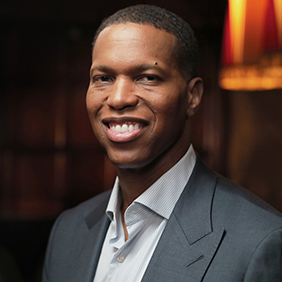
In this new series, iconic investors reveal the critical moments that have shaped who they are today. In conversation with Morgan Stanley leaders, they share two out-of-consensus calls – one that was on the money, and one that wasn’t. Tap into the mindsets that carried legendary investors through both setbacks and success.
Jon Gray
I remember going to see investors and distinctly one of our state pension funds in the meeting, telling them about one of the writedowns. And I just remember that awful feeling leaving that meeting, going back to the airport and being like, wow, I cannot let this person down. This is not good.
Narrator
From Morgan Stanley. This is hard lessons where iconic investors reveal the critical moments that have shaped who they are today. You'll hear about two out of consensus calls, one that was on the money and one that wasn't.
Narrator
Today on the show. Jon Gray, president and chief operating officer of Blackstone with Dan Simkowitz, co-president of Morgan Stanley. Jon stepped into his current role in 2018, and since then, Blackstone's assets under management have more than doubled to over $1.2 trillion.
Dan Simkowitz
Well, it's so, so good to have you here. It's fantastic. You know, I'd say 30 years ago our industry was so private, frankly so small. So, I think it's a little inspiring what you're doing around marketing for financial services. But you know, when we led the Blackstone IPO you were $88 Billion of AUM. Now you're over $1 Trillion. The organization is bigger and more complex.
You've built both a world class client service organization, but at the core of it is just incredible investment, discipline and performance. And so John, we're going to talk about two out of consensus investment decisions. Set the scene for one of the winners.
Jon Gray
Always better to talk about the winners, although you learn more from the losers. Right around 2007 we bought Hilton Hotels. I led that investment. It was a $26 billion investment, and I was, um, excited because this was a obviously iconic company that owned some incredible real estate like the Waldorf, had a timeshare business and then had this unbelievable management franchise business Hilton and Hampton Inn and DoubleTree, Conrad, Hilton Gardens, all of that.
And it was at a time when the market was pretty frothy because it was before the financial crisis. You remember people were borrowing a lot to buy homes. They were borrowing a lot in leveraged lending in the corporate world. They were borrowing a lot in commercial real estate. Prices were elevated, and I thought we had found something in operating business with some real estate inside that we could buy at a reasonable price.
Now, we paid a big premium 40% over the stock market at the time, and we bought the business $26 billion. We borrowed $20 billion. It was a different era.
Dan Simkowitz
How did that feel?
Jon Gray
Well, at the time, there was so much leverage in the system.
Dan Simkowitz
It was– you’d never borrow $20 billion before?
Jon Gray
No. Well, except that we had bought EOP. We had bought the largest office business, and that was a $39 billion deal, and we had been on this run buying public companies, because at the time I was running real estate and we were able to buy the businesses on the screen much more cheaply than we could be when we were bidding for individual properties.
And so we started scaling way up. But in this case, we took on a business with some volatility hotels and put a lot of leverage on it. And we took money from our private equity business and our real estate private equity business, $5.6 billion of equity, the largest investment we'd ever made at the time as a firm.
And we bet on this. And we closed the deal in the fall of ‘07. Terrible timing. And by all accounts, I should not be sitting here with you, Dan. They should have carried me out. And it looked that way. Because if you recall, the financial markets really tighten up and the real economy goes down. And this business, Hilton loses 20% of its revenue and 40% of its cash flow.
And we've leveraged it up a bunch. We write down the investment by 71%.
Dan Simkowitz
So you actually took the action to write it down.
Jon Gray
We took the action to write it down because it was clearly very impaired. And I remember going to see investors, and I remember distinctly one of our state pension funds in the meeting, telling them about one of the write downs. And the investor was almost physically ill, which is understandable, because he had a very large investment with us.
And I just remember that awful feeling leaving that meeting, going back to the airport and being like, wow, I cannot let this person down. This is not good. And I think fortunately, maybe because of my core optimism, but also my belief in the underlying business, I didn't lose faith. We also had an amazing management team led by Chris Nassetta, who's still the CEO of Hilton.
I'm still the chairman. 18 years later, it's pretty amazing.
Dan Simkowitz
That's a rarity.
Jon Gray
A rarity, yes.
Jon Gray
We got through this now. How did we do it? We ended up putting in an extra $800 million to help deleverage the company and get some additional term on the debt. The management team did an amazing job. They kept growing the business, particularly outside the United States. And then ultimately the world started coming back.
People started traveling again. The business was performing. We went public. A few years later, you guys were involved in that as well. We ended up, you know, splitting into three companies a timeshare business and owned real estate business and a management franchise business. We sold some individual assets, and then we sold our stock, and we ended up making $14 billion, the most profitable real estate private equity deal of all time.
And the movie should not have been written. It should have looked completely different. And so it makes you think a lot. What are my takeaways as an investor? And and I would say the biggest ones are one. You got to stay calm.
Dan Simkowitz
Stay positive. You never give up.
Jon Gray
That's what I say every Monday on on our TV. It's what I say to my daughters. But the most important thing on Hilton was that what I learned as an investor was maybe I spend too much time thinking about whether I should pay $99 or $101 and so forth, and maybe what matters more is sort of the neighborhood I'm investing in.
The underlying tailwinds, in this case, global travel, the quality of the business, in that case, a capital lite, fast growing franchise management business, as well as the quality of the management team. And if you can get those things right, even if you made a really poorly timed investment and paid a big premium, it can still turn out okay.
And so when I think about today is we're investing into digital and energy infrastructure, or in India or in life sciences or areas where we have really high conviction. That to me comes from this experience, which was why did this turn out? Well, it should not have turned out well. And so, the lesson of let's try to find the right neighborhoods to deploy capital that has really stuck with me.
Dan Simkowitz
It's interesting because we're such great partners, our two firms, partly because in the last 15 years we got intensely dedicated on just helping clients allocate capital, but we needed to be bigger and a little different. So we bought Smith Barney, bought E-Trade, bought Eaton Vance, you know, all these these acquisitions, but they're all around a neighborhood we loved.
Dan Simkowitz
Having a partner. So in your case, you had Chris, but presuming you also had your own team, you know, how important is that? Especially when it's really dark. How important was that.
Jon Gray
On a deal like Hilton? Super important. I would say having business colleagues who still believe in you. First of all, you guys have done an amazing job because also you've got a great culture and you have all these capabilities, both serving individual investors and obviously as an investment in commercial bank providing capital and and that ability to show up as a partner, even in the bad times, having people who still say, yeah, we've got to find the way out through this thicket, that's really important.
And I would add a personal element to this. Having a wife and children and people you can go home to who still believe in you, even when the world doesn't, that matters.
And I'll just give you a sense of how dark it felt. Um, in early oh nine, the company had an employee who had taken some documents from a competitor the company had found out sent him back. Nevertheless, there was a federal investigation. There was a big article in the Wall Street Journal, and I was talking with Chris Nassetta, and I called him and it was March
Yeah, it was probably March of ‘09. We'd written the investment way down. We had this investigation in the headlines, and I said, Chris, the good news is it cannot possibly get any worse. But the fact that I had him, I had my family, I had colleagues, and ultimately that this was a terrific business, that what we faced was cyclical, not secular in nature. That made a huge difference.
Dan Simkowitz
So now it's one of the greatest private equity deals of all time. But in the darkest days, it was hard. What's the one big, hard lesson coming out of Hilton?
Jon Gray
Well, I think the hard lesson was…
You don't want to put that much leverage, even on a great business, because the key is you've got to be able to get to the other side. When you own a great business, great piece of real estate or infrastructure, ultimately it will It'll compound or grow. And the problem is people get stopped out. In the trading world, it's margin debt.
It could be leveraged lending in corporate world or real estate debt. And if you have too much put so much pressure, you may be forced to sell dilute your ownership at exactly the wrong moment. So the good lesson was focus on great businesses, great neighborhoods and stay calm. But the hard lesson is don't put yourself in such a precarious position that if the weather outside gets tough, you're at risk of losing things.
Dan Simkowitz
So this one worked out perfectly in the end. Yes, EOP worked out great. These are oh seven vintage deals right before the crash. Give us one that didn't work out so well.
Jon Gray
One of the toughest lessons for me happened in the late 90s during the dot com boom. I joined Blackstone in ‘92. I did M&A in private equity for a year, a year and a half, and then I went into real estate after a crash and basically for, I don't know, 6 or 7 years. I'm in real estate. Things just keep going up and up because you were you had bought things very cheaply.
Interest rates were reasonable. There wasn't too much building. And when you buy everything and it goes up, it doesn't really train you to be a great investor, right? It's the experience. It's these hard lessons that make all the difference. And sort of the top of that was in the late ‘90s. I was really focused on Northern California because you were seeing the innovation.
We were moving on to the internet and so forth. And what happened was I bought a building on North First Street in San Jose, a nondescript two story, and these were really crummy assets. They were crossed between office buildings and warehouses. They weren't worth very much physically, and we paid a big price for them because they had a tenant paying a huge rent, and instead of buying it at a 7 or 8% yield, I was buying it at 11 or 12%.
I thought this was amazing. What I failed to notice was the major tenant was Gobosh.com
Dan Simkowitz
What’s Gobosh.com?
Jon Gray
Gobosh means go big or stay home.
Dan Simkowitz
Oh God.
Jon Gray
I'm sure that you know, this company of unfortunately didn't last very long. I should have stayed home because by March of 2000, you know, the dotcom bubble blows and this tenant disappears. And I should have recognized we were paying well over physical replacement costs. The quality here was poor, and the tenant didn't have much in the way of revenue.
It had very few people in the space, and in my enthusiasm of what had come before it, I sort of lost sight of that. Now we ended up getting a letter of credit. I think we got about a third of our money back, but it was really the first time I experienced financial loss in an investment. And I don't know, we lost $20 or $25 million, but it was embarrassing to tell your investors, to tell your colleagues and to look at it after the fact.
It was like, oh my gosh, how stupid could I be? Why would I pay that price for this? And there. It's a little bit of the danger of the mania of crowds, right where things were going so great that in that moment in time, we became disconnected from fundamental value.
Dan Simkowitz
And did someone come to you in that instance because you're not as senior as you were in oh seven and say, you know, John, these are the lessons that have to happen and hang in there, or did you have to learn that yourself?
Jon Gray
I think that we all sort of talked about it. It was pretty clear after the.com bubble burst, it was pretty clear to look back and say, gosh, when companies are trading at hundreds of times revenue, they're not making any money. The business model isn't viable. This was way too speculative. And what's interesting is I know today there's a lot of are we in the same kind of environment?
The only thing I would say is it feels very different to me. I mean, back then, as you know, Cisco, I think was the biggest company they traded at 130 times earnings. Nvidia, the biggest company today I think is less than 30 times earnings. And so I don't think we're that kind of time. Now, if this runs for five more years and people think trees grow to the skies, that's always a risk.
But I think as an investor, again, when you go through those experiences, it reminds you to question yourself that the danger is sort of the winning hand thing, that you keep doubling down, you keep doubling down because it's working. But at some point the prices move too far, the assumptions move too far, and just because something's worked for a long period of time doesn't mean that's going to continue.
Dan Simkowitz
Blackstone probably has great people joining all the time, but if they've joined since 2010, yeah, away from the Covid period, which is, you know, pretty V-shaped, they may not have experienced the same challenge that you did. How important is it to go through one of these drawdowns or real hard lessons?
Jon Gray
I think you learn so much more because when you have success, what it teaches you your genius, right? Like you buy something, it goes up, it doubles in value. Look how smart. You don't even think about it. It's when something goes wrong that you sit down and say, why did that happen? Like, what did I lose sight of in fundamental value?
What did I miss about this business? Shouldn't I have known that? And you tend to really dwell on it and it makes you better. And then you begin to have pattern recognition. You begin. Then as you get more senior to say, oh, I've seen this before. And so the danger, of course, is when people get burned. Sometimes they have a hard time going back.
Right. And so they bought an asset at 100. It now trades at 40. And they're like oh no no I'm still scared. But you're like wait, wait. The risk is much lower. And as you know, the psychology is people are more enthusiastic investing as the prices go up as people perceive risk is lower. And one of the good things I think about the current environment is there's so much negativity.
Everybody there's a bubble and private credit. There's a bubble in AI, there's a bubble in the stock market. In some ways, that sort of caution that lingers over everything is helpful to stop things from getting out of hand.
Dan Simkowitz
John, these are incredible investment perspectives. But if you think about your career, your adult life, what's the hardest situation or lesson that you've faced?
Jon Gray
Well, I would say certainly in my career was what happened this summer. We lost an amazing colleague in Wesley LePatner. We had a horrific shooting at our building. Um, random act of violence. And, um, you know, to lose somebody who was an amazing professional, but an even better human being, mother, wife, daughter, great mentor to so many of our people.
And then, you know, to have your people go through the trauma of one of these mass shootings, that was really hard because there's not really a playbook. It's not like an investment thing. Oh, here's what we're going to do. And the only thing you could do is sort of express your humanity. Try to give people support, mental health support.
Do all sorts of things bringing people together and then honor Wesley's legacy, which I think is really important. So for me, that was that was the toughest moment, I would say, certainly in my career, because it went well beyond financial into the human. And, um, hopefully you never endure anything like that again.
Dan Simkowitz
It's very tough.
Jon Gray
But the really important thing, again, is to connect with people. And the the thing about our firm, I felt has always been special. It's always run like a small business. And we can emphasize over and over again the importance of delivering for our clients the performance that we operate with integrity.
But if you think about an investment organization or financial services company at its core as a culture of the place, and that's what we're desperately trying to hold on to.
Dan Simkowitz
Jon, that was incredible. Amazing lessons. Thank you for the partnership. We really appreciate it. It was fun.
Jon Gray
Dan, it was great. Thank you, thank you. Morgan Stanley great partnership as well. Thank you.
Narrator
You've been watching Hard Lessons, an original series from Morgan Stanley. You can listen to an extended audio version of this episode on Apple, Spotify, or wherever you get your podcasts. For more information about the series, visit Morgan Stanley dot com slash Hard Lessons.
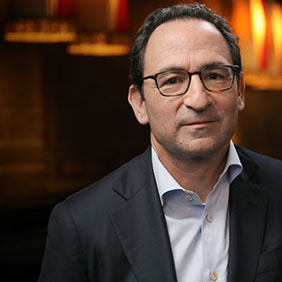
It was a big, big negative event.
Jean Hynes
There was so much value created. When a drug works and when it doesn't work, there's a lot of value destroyed. Sure.
Narrator
For Morgan Stanley, this is hard lessons where iconic investors reveal the critical moments that have shaped who they are today. You'll hear about two out of consensus calls, one that was on the money and one that wasn't.
Narrator
Today on the show, Jean Hynes, CEO of Wellington Management with Amy Ellis, global head of senior relationship management at Morgan Stanley. Jean became CEO in 2021 after spending her whole career at Wellington, where she was a portfolio manager, an industry analyst in healthcare and biotech. Her deep and thoughtful approach to research continues to inform her strategy today.
Amy Ellis
Jean, thank you so much.
Jean Hynes
I'm so happy to be here, Amy.
Amy Ellis
You've seen so much. You've accomplished so much. We've all had moments in our career. We've had to make decisions, and we didn't know how they were going to turn out. Here on Hard Lessons, we're here to explore those with you. Can you set the stage now for us on a bet that you made and how it worked out for you?
Jean Hynes
There was a company called Schering-Plough, a pharmaceutical company. It's probably most well known for the drug Claritin. Sure. Which is a staple in everyone's life. It's now over-the-counter. Claritin was coming off patent in 2002, and they also had this new what I thought was an exciting cholesterol agent that was in development.
Okay, so I had this company that I had not owned, I knew Claritin was coming off patent and that the new drug was also going to be launched. And so that's where it gets a little tricky because you have you have very high margin drug going off patent, and then you have a new drug that you have to launch and invest in, and then you have uncertainty about the trajectory.
Amy Ellis
What gave you this confidence? What gave you this fortitude? That this was the inflection point. This was the time to get involved.
Jean Hynes
People probably know statins. There are millions and millions of people on statins. And statins are an amazing medicine. But at the same time, there were lots of data that showed getting cholesterol even lower than these medicines could do. It was very important. And then Schering-Plough had a drug that was a brand new mechanism.
So the bet was that it would be complementary to the statins. It wasn't going to replace the statins.
Amy Ellis
Okay. So how out of consensus were you?
Jean Hynes
So I think I was out of consensus at many points at the time. Okay. But I think the big call was that it was going to be a successful drug in its profits. It would replace the profits of Claritin. Wow. I think over that decade that actually turned out to be true.
Amy Ellis
And you got it right.
Jean Hynes
And I got it right over the long term. Like Schering-Plough probably was one of the best pharmaceutical investments in that decade. But it was. There was a lot of ups and downs in between.
Amy Ellis
Were there moments you thought you misstepped? You thought you got it wrong?
Jean Hynes
This is the science and art of investing. In 2002, a Claritin patent went off. And what happened in the years prior is that you began to have consolidation in the retail drugstore chains, moving from this independent pharmacies to CVS and Walgreens. Like much more consolidated retail chain, you also had the emergence of pharmacy benefit managers.
And so by the time Claritin went off patent and the retail drugstores and the PBMs were all incentivized to switch as fast as possible, you went from a scenario where drugs lost their patent and lost their sales over five years, to losing their sales over one year. I think it surprised me. It surprised the pharmaceutical companies.
It surprised everyone in the market.
Amy Ellis
Ton of new learning.
Jean Hynes
A ton of new learnings during that time. And so what that meant was it wasn't going to be a perfect line of clarity going off and going up. And and then the question was, how does a company that's losing a 99% gross margin drug, um, still invest in this new launch? And that's where my earnings estimates were too, too high because we were all learning at the time.
The company was trying to not lower its earnings estimates. And so they were they were doing things that probably didn't benefit the launch of the idea because they were trying to, um, smooth it and reduce profits. They were also launching Claritin over the counter. I'll tell you a funny story is my husband comes home and he brings home, um, private label Claritin.
And I was like, you can't do that. You need to buy the branded. But it was a sign that actually branded Claritin was priced too high. Yeah, because they were trying to price it to save their profits.
Amy Ellis
During that journey. What other things did you realize about long term holdings of big companies?
Jean Hynes
So I think what held me in the stock was the fact that they did change management. So we had a new CEO come in. His name is Fred Hassan. I had a lot of admiration for him, but my biggest lesson was that in 2003, when he came in, I should have known that he would have wanted to invest. And in order to invest. What he did is cut the dividend.
Yeah. And he and he lowered the earnings so that he could invest. Now I am on maternity leave. By the way, when this happened with my fourth child, who is at that point, I'm like 5 or 6 weeks old, and you do not want to have a stock that has a dividend cut.
Amy Ellis
While on maternity leave.
Jean Hynes
And it's one of the biggest holdings of the firm. Yes. And so it was the right thing to do from a management perspective. Like he created more value by making those very hard decisions. So for me, the heart, like the lesson learned, is I should have known this. Like I should have known that he was going to do something dramatic to create the long term value.
Amy Ellis
So you said that always stayed with you, so you've never missed that sense.
Jean Hynes
I've never had another stock that had a dividend.
Amy Ellis
Love it. I love it.
Amy Ellis
So Jean, can you tell us how Schering-Plough journey ended?
Jean Hynes
Yeah. So in March 2009, Merck and Schering-Plough agreed to merge. It was a partly cash and partly stock transaction. It was a big transaction. So interestingly, Merck bought Schering-Plough and actually Pfizer bought Wyeth. I own both Schering-Plough and Wyeth. The interesting thing was that so I hold these stocks, I hold Schering-Plough and of course there was a pop like that was good.
But then the price of Merck went down so much, and actually the price of Pfizer went down so much. I thought the acquisitions were actually quite good for Merck and for Pfizer. And so what I had to do is something I had never done before, is take a step back and say, if if people begin to realize that these are actually really opportune and good value acquisitions for these companies, those stocks are going to go up and I will never get the full value of the value creation of Schering-Plough. And so what I did within the month or two is recommend that we sell all of our Schering-Plough and buy Merck instead. And so in the end it was actually the stock part of it too. I had to get right because I could have done all the analysis right. But if I hadn't done that move, which I had never had to even think about before.
Yeah. But because they were such large acquisitions and some of it was in stock, I had to figure out like what was the right thing to do to actually make sure I created all the value for our clients.
Amy Ellis
And looking back, I mean, you have to think that was such a good move.
Jean Hynes
This was a great acquisition for Merck. Yeah. Yeah. And what came out of that was not only that, that Zetia in the cholesterol franchise became a good franchise, but ensuring class pipeline ended up being Keytruda, which is now the largest drug in the world. It really changed Merck's future. I always like to say whenever something works, you actually can celebrate for just a short period of time.
You go, yay for like literally a day, and then you have to actually decide what to do.
Amy Ellis
Okay, so let's let's shift here a little bit and talk about an out of consensus call that didn't go so well. Yeah.
Jean Hynes
So giving you a little bit of history. Elan was a drug delivery company based in Ireland. We did not own it, by the way. We had a very negative view of Elan during the 1990s. They had a very high earnings growth, but in my view it was very low quality earnings growth. Got it. But then in the late 1990s they bought a company called Athena Neurosciences.
Now we were the largest shareholder of Athena Neurosciences. We knew that company. They were developing drugs for multiple sclerosis and for Alzheimer's. They were based in South San Francisco. It was a very odd acquisition that this sort of lowest quality drug delivery company would buy the South San Francisco.
Very exciting. Hi. Science company. Okay. And so we had a very positive attitude towards Athena, but all the issues about earnings quality were still happening with Elan. Okay, I was right. Like the earnings quality was really really quite low. Yeah. But then at the same time the pipeline of Athena was beginning to merge.
And so we began to buy a lot for really for the pipeline of Athena Neurosciences that at some point people would realize what they had and you'd have this massive uplift of quality and excitement about the future. There's two parts of Elan that were difficult. One was that last bit of low earnings quality came out after we bought it.
Okay. And this is another lesson. So when you have a profit and loss statement, you have revenues and you have a cost of goods and you can't really hide those unless it's fraud. But you also have this other revenue line. Okay. And my lesson is that I didn't dig in deep enough to that.
Amy Ellis
Interesting.
Jean Hynes
Line. Interesting. So there ended up being things that were non-recurring. And so it wasn't real earnings. The lesson for me is you know and and I say this to all our young analysts like you need to understand every line of the PNL. Yes, every single line. And you can't just put a plug in. You have to really dig.
So that was another thing. I'm never going to let that happen. Okay.
Amy Ellis
That's fair.
Amy Ellis
All right. So that was the first line. That was the first line.
Jean Hynes
And then and then the excitement happened. Yeah Amy the excitement happens. They bring this drug for multiple sclerosis to the market in the first generation of multiple sclerosis drugs. They took patients out of wheelchairs. Doctors would say in the early 2000, I don't have people in wheelchairs anymore.
But at the same time, they were drugs that were difficult to take. From a tolerability perspective, the way the drugs work, they cause people once a week to feel like they had the flu. So they were amazing. Inventions and innovations and not optimal. So we were looking for what was going to be the second generation of multiple sclerosis drugs.
And how was it? And and if you did the research, this mechanism really reduced the inflammation that was going into the brain. Patients felt great and the drug was approved. And then it was taking off like faster than almost any drug. It was like, wow, this is going to be such an.
Amy Ellis
We got it.
Jean Hynes
Right. And I was underestimating the launch. Wow. That's how that's how positive it was. So this is February then of 2004, and I am in Japan, and I remember being out to dinner with a Japanese company coming back to my hotel room and the red light blinking. So I listened to the message on the hotel phone.
And it's my trader back in Boston saying, Tysabri has been pulled from the market, and I'm sitting there in my hotel room saying, what? Like, how could it possibly be pulled from the market? I mean, the reason Tysabri was pulled from the market, it was so good at reducing inflammation to the brain, it was almost too good.
There was a very low incidence that a lot of very, very rare virus to start in very few patients. But the outcome was death. And so like you can't accept unacceptable. And so I'm like across the world in a hotel room up half the night, I had to leave a message for the portfolio managers on voicemail like I wasn't at a computer.
You didn't have blackberries, you didn't have iPhones. So I'll tell you the next day the stock is down 90%. I come out to the car and my and my great colleague said to me, he's like, Jean, There's nothing you can do today. And we're here in Japan to do a job for our clients. And we need to focus on the job at hand.
And there was nothing you could do. The stock was down 90%. So it wasn't as if, like, you were going to save a lot of money by selling it. Like you can get to it next week. So I want to tell you how difficult this was. I have a wonderful colleague who loves facts. And he said, Jean, do you know that this is the first company with a market cap over 10 billion to go down 90%?
Jean Hynes
It was a big, big negative event.
Jean Hynes
I ended up doing a lot of work in the ensuing months. I didn't sell my position. I just kept it and I did work. Alon ultimately got acquired by another company. It wasn't a great holding. Yeah, yeah, it did recover from that 90% because we ended up coming back on the market. And it really did teach a lot about science.
It really told you you can do better for multiple sclerosis patients. But now, 20 years later, there are really good drugs for multiple sclerosis that balance that safety and and efficacy and tolerability.
Amy Ellis
Interesting.
Jean Hynes
These are high risk. That's the beauty of biotech and pharmaceuticals. It's not good enough to just understand the science and what's going to happen. You have to understand the financial implications when you're really researching science and you're on the cutting edge of science, it doesn't always go how you want.
And so there is so much value created when a drug works and when it doesn't work, there's a lot of value destroyed.
Amy Ellis
Sure.
Amy Ellis
So what did you learn when Elan opened up down 90%?
Jean Hynes
I think the lesson for me is you need to make sure that you are you're taking in all the potential risks in an area of medicine where it's cutting edge. And you can't always know everything. And then how do you react?
Amy Ellis
And at that moment, you decided to hold that moment.
Jean Hynes
I decided to hold and do research and wait and see, like, would the drug come back on the market? I could have just stopped and said, I'm not going to do this. There's probably an opportunity cost for that research to an opportunity cost for holding, or it could have been in another stock. But the decision I made was to hold and and we did recapture some of the value.
But those are the decisions you have to make every day.
Amy Ellis
You went back to your trusted process.
Jean Hynes
When you do this deep research, and then you have an insight about how the future of medicine is going to change in a way, and then it could still be another five years till it gets to the market. It's it's when do I have enough dots connected? If I waited for everything to come out in phase three trials, we would've never made any money for our clients.
Amy Ellis
We sat together four years ago as you were ascending into the CEO space. What have you learned? What are the hard lessons of being a leader?
Jean Hynes
I became a managing partner in 2014, and in my first year I started working with a coach, and one of the things she asked me early in our coaching was like, do you want to be CEO someday? And I like, literally said no. Like it hadn't even crossed my mind, actually. And the reason for that, I think, was there aren't that many role models, right?
There aren't that many role models. I had this image of CEOs and that was not me. Visionary, super creative. Aggressive. Um, that's not who I was. But when I took a step back, actually, the CEOs that created the most value in that I admired the most also didn't have those characteristics.
Amy Ellis
Interesting.
Jean Hynes
They were really this combination of optimists, strategists, um, humble, authentic. Those were sort of the characteristics of the of the CEOs that I admired the most.
Amy Ellis
So how long did it take you to think about, hey, I could do this.
Jean Hynes
It took about a year before the inkling came in. Okay. It was a big decision to make. Two. Yes. Um, was I the right person? And if I was the right person, what did I want to do? Like, how did I want to spend the last decade of my wonderful career at Wellington. Is this how I wanted to spend my time?
Amy Ellis
Five years in. What are you most proud of and and what itches at you still?
Jean Hynes
The asset management industry is going through a lot of change. So one of the things that I can recognize is that I've seen the biotech and pharmaceutical industry be stable and be unstable, and I feel like the asset management industry is going through one of those changes. Sure. I think what I'm most proud of is shifting.
Of course, we're going to have to pivot, but changing the mindset of 3000 people that, um, you know, we can pivot. Yes. For sure. You know, we have to pivot and we can and change most. You know, change is scary and exhilarating. Yeah. We're all in it together, and we can shift and create the next hundred years.
We're about to have our 100th year anniversary. And so there aren't many companies that have 100 years. So really, it's what I'm most proud of are my laying foundations that will help the next decade, and the next decade after that. When I think about great CEOs that I've interacted with over time, I feel like they've done that.
Like, it's not about what they did in any one year. It's not about the stock price during their period, even though I think that's how CEOs get recognized. It's about what do they do to create the value for the next ten years or the next ten years after that?
Amy Ellis
Jane, this has been wonderful. Thank you so much. Look forward to having a discussion in another five years.
Jean Hynes
Thank you for having me. You can you can probably tell Amy that I'm very passionate about biotech and pharmaceutical investing. And it was really fun to kind of go back and reflect on those journeys. So thank you for having me.
Amy Ellis
Fantastic.
Narrator
You've been watching Hard Lessons, an original series from Morgan Stanley. You can listen to an extended audio version of this episode on Apple, Spotify, or wherever you get your podcasts. For more information about the series, visit Morgan Stanley.
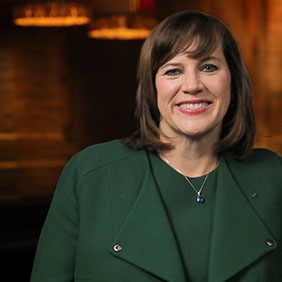
Sign up to get Morgan Stanley’s Five Ideas newsletter delivered weekly to your inbox.
Subscribed!
Thank you for subscribing to our blog newsletter. Stay tuned to hear about Morgan Stanley ideas!
The preceding content was informational only and based on information available when created. Neither the information provided nor any opinion expressed constitutes an offer or a solicitation nor is it tax or legal advice.
The views and opinions and/or analysis expressed are those of the presenters as of the date of preparation of this video and are subject to change at any time without notice due to market or economic conditions and may not necessarily come to pass.
©2026 Morgan Stanley CRC 5122803


