
Morgan Stanley Global Healthcare Conference | New York 2026
New innovations around diseases including Alzheimer’s. The growing reach of GLP-1 therapies. AI’s ability to accelerate drug development and reduce costs. See what is top of mind for 3,000 investors and leaders from the biopharmaceutical, biotechnology, medical services and health services sectors.
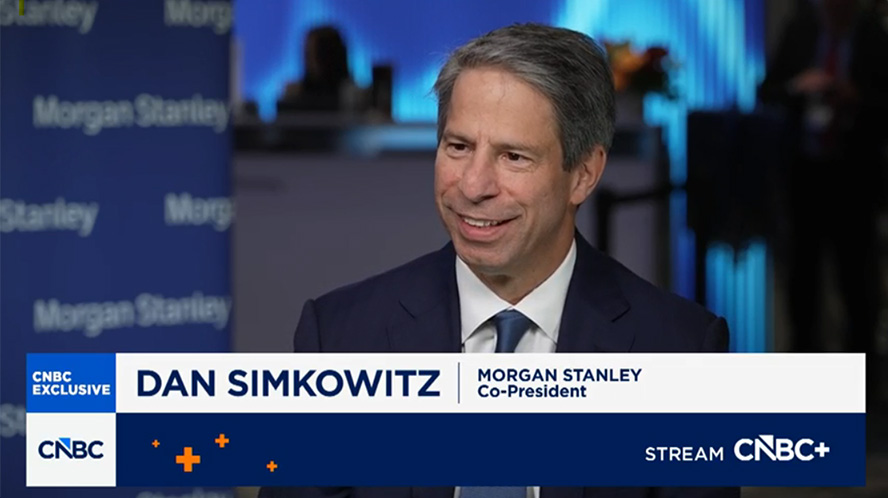
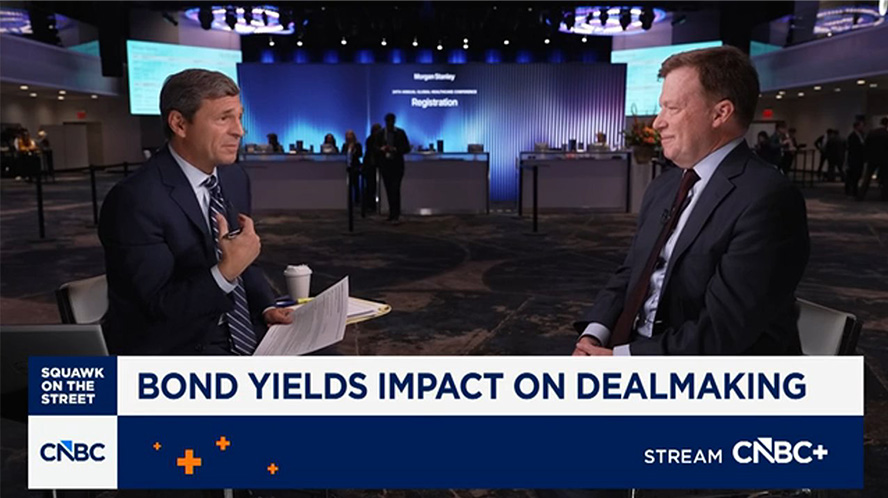




Exceptional Leaders
Experts from across the firm sit down with leaders at healthcare companies for insightful conversations.
Thoughts on the Market Podcast
Patients Are Taking the Driver's Seat in Healthcare
Transcript
Erin Wright: Welcome to Thoughts on the Market. I'm Erin Wright, US Healthcare Services Analyst at Morgan Stanley.
Terence Flynn: And I'm Terence Flynn, Morgan Stanley's US BioPharma Analyst.
Erin Wright: Today, how the consumer is moving into the driver's seat across healthcare.
It's Monday, September 14th at 7:00 AM
We're recording in New York City, where Morgan Stanley's twenty-fourth Annual Healthcare Conference is happening this week. One of the biggest shifts we're seeing across the industry is patients gaining more choice, transparency, and control over how they access care and medicine. You can already see it in everyday behavior. In our AlphaWise survey earlier this year, thirty-four percent of US consumers said that they'd chosen to take a voluntary wellness lab test in the past three years, and roughly two-thirds already own a wearable or plan to buy one.
And now we're seeing the same trend reshaping how people buy medicine and choose care. So Terence, let's start with biopharma. For years, direct-to-consumer pharma meant advertising and nudging people to ask your doctor about what particular treatment is best for them. What's different this time around? And what's different in this next wave of direct access?
Terence Flynn: Yeah, absolutely. Thanks, Erin. So for most of the industry's history, the patient sat at the end of the value chain and had really limited control over the product, the price, or the route through which the drug was obtained.
Manufacturers marketed to doctors and consumers, but the transaction was itself intermediated. So we think that's starting to change here. It's no longer simply about more consumer advertising or another cash pay discount. There's a parallel access infrastructure that's building here where the patient can increasingly start the initiation of the treatment journey themselves, obtain a prescription, often digitally through a telehealth provider, and then fill this prescription through other non-traditional channels.
And so there really is a shift in the model that we're starting to see here. But again, we're not talking about replacing insurance here; we're talking about areas where friction is high and where a cash pay price is viable.
Erin Wright: So Obesity has been the clearest proof point, as we are seeing patients asking providers about GLP-1s. Where else are we seeing this?
Terence Flynn: Yeah. So manufacturers are actually already selling over twenty-five branded drugs directly to patients at cash prices. Now, the common features of these drug classes are that they're self-administered, so essentially the patient can start and stay on treatment, and where there's limited in-person infrastructure that's needed, and where, as I mentioned, you have a lower price point or a coverage gap, meaning traditional insurance coverage doesn't exist.
Now, we're seeing this in large chronic categories. You mentioned obesity. Another one is, migraine headaches. There are also other areas that are amenable to telehealth, so think oral PCSK9 therapies, topical dermatology, non-opioid pain. So again, we think as more self-administered products launch, you're gonna see the addressable DTC pool expand.
Erin Wright: And ultimately what does this reveal about patient demand and gaps in reimbursement?
Terence Flynn: Yeah, I think GLP-1s, as you mentioned, Erin, provided the first proof point here that this new DTC model could actually be viable. And really the reason for that is that, the US employer coverage base right now, only about fifty percent cover these obesity medications.
And so for the other fifty percent, you have a gap in coverage. And that's really why people are seeking other channels for coverage. And so again, that really created this opening here for this new model. And so again, that's another consideration when you think about other medicines that could go through these channels is you have to think about the insurance coverage situation. And so for some areas like oncology, for example, insurance coverage is gonna be very high, and so those wouldn't be amenable to a DTC approach.
Erin Wright: So Terence, your analysis points to roughly twenty-six billion peak US opportunity. What makes a certain therapeutic well-suited for direct-to-consumer, and where is the opportunity most concentrated?
Terence Flynn: Yeah. So there are really four variables that we considered. The first is self-administration. So as I mentioned, you have to be able to administer the medicine yourself, meaning you don't have to go into the physician or hospital for an injection, for example. The second is that the diagnosis doesn't need an in-person confirmation. So think of something like a biopsy or something. So you'd have to be able to diagnose, as I said, over a remote telehealth channel. The third would be something that is a lower price point. Obviously, there are, like we mentioned, the GLP-1 medicines are at a different price point versus oncology medicines.
And then the last one would be any kind of legal restrictions. So sometimes FDA has a lot of restrictions around who can prescribe a medicine. These are called REMS. And so any medicine that had restrictions like that obviously would not be amenable to DTC. So again, we think through those different variables, and then we ultimately built up this twenty-six billion dollar TAM that represents about three percent of total branded pharmaceutical spend. Of that, about half is driven by the obesity or GLP-1 medications.
So Erin, that's a good bridge to healthcare services because consumerism isn't just about paying cash. What does greater consumer control actually look like?
Erin Wright: You're right. It's not just about paying out of pocket for healthcare. With now consumers becoming more proactive with their healthcare and preventative care, we are seeing a whole healthcare ecosystem shift, from health insurers now offering lifestyle savings accounts empowering patients with more choice on that front, health systems and hospitals are creating a digital front door and delivery of care twenty-four/seven on that front. And also, we're seeing more direct-to-consumer pharmacies and transparent pharmacies that are gaining traction.
Terence Flynn: And what does the Alpha Wise survey data tell us about consumers' willingness to pay out of pocket for care?
Erin Wright: So based on our AlphaWise consumer survey, twenty-five percent of consumers report paying entirely out of pocket for at least one healthcare service over the past year. That was actually higher than what we were expecting. Most commonly, this was attributable to behavioral and mental health services, about eight percent of the cohort.
Annual spend was about nine hundred and eight dollars, but maximum willingness to spend was about double that. So this suggests consumers are using out-of-pocket services and medications and are willing to spend to do so.
Terence Flynn: That's very interesting. How important are digital tools, wearables, and testing in actually accelerating this shift?
Erin Wright: So wearables are certainly a piece of the puzzle. What is new though here is that we're seeing wearable data align with actual biological data, where, for example, clinical laboratories are now partnering with these wearable companies and other direct-to-consumer healthcare platforms to offer subscription-based biomarker panels and other testing services. This is where this type of technology becomes more actionable from a healthcare perspective and really, frankly, empowers patients to take matters into their own hands.
Terence Flynn: So as consumers take more control, as you discussed, what types of healthcare service models are best positioned to benefit?
Erin Wright: There are certainly a host of companies across healthcare that are attacking this from several different angles.
But if we think about who in the industry has the most touch points into the consumer, into the patient, it would be your diversified managed care companies and vertically integrated managed care companies where we view that many of these larger insurers are best able to adapt to consumerism in healthcare. We're already starting to see that happen with stepped-up technology investments helping to facilitate greater transparency and access, whether it's across insurance, provider arms, technology, or, um, or pharmacy assets as well.
To sum it up, in biopharma, we're seeing a parallel access channel emerge alongside traditional reimbursement. And in healthcare services, consumers are gaining more control over how they choose access and pay for their care. Consumers aren't stepping outside of the healthcare system. They're taking a more proactive and more active role in how they navigate it.
Terrence, thank you for taking the time to talk.
Terence Flynn: Great speaking with you Erin.
Erin Wright: And thanks for listening. If you enjoy Thoughts on the Market, please leave us a review wherever you listen and share the podcast with a friend or a colleague today.

Can AI Make Healthcare Less Expensive?
Transcript
Terence Flynn: Welcome to Thoughts on the Market. I'm Terence Flynn, Morgan Stanley's U.S. Biopharma Analyst.
Erin Wright: And I'm Erin Wright, U.S. Healthcare Services Analyst.
Terence Flynn: Thanks for joining us. We're actually in the midst of the second day of Morgan Stanley's annual Global Healthcare Conference, where we hosted over 400 companies. And there are a number of important themes that we discussed, including healthcare policy and capital allocation.
Now, today on the show, we're going to discuss one of these themes, healthcare spending, which is one of the most pressing challenges facing the U.S. economy today.
It is Tuesday, September 9th at 8am in New York.
Imagine getting a bill for a routine doctor's visit and seeing a number that makes you do a double take. Maybe it's $300 for a quick checkup or thousands of dollars for a simple procedure.
For many Americans, those moments of sticker shock aren't rare. They are the reality.
Now with healthcare costs in the U.S. higher than many other peer countries on a percentage of GDP basis, it's no wonder that everyone – not just investors – is asking; not just, ‘Why is this happening?’ But ‘How can we fix it?’ And that's why we're talking about AI today. Could it be the breakthrough needed to help rein in those costs and reshape how care is delivered?
Now I'm going to go over to you, Erin. Why is U.S. healthcare spending growing so rapidly compared to peer countries?
Erin Wright: Clearly, the aging population in the U.S. and rising chronic disease burden here are clearly driving up demand for healthcare. We're seeing escalating demand across the senior population, for instance. It's coinciding with greater utilization of more sophisticated therapeutics and services. Overall, it's straining the healthcare system.
We are seeing burnout in labor constraints at hospitals and broader health systems overall. Net-net, the U.S. spent 18 percent of GDP on healthcare in 2023, and that's compared to only 11 percent for peer countries. And it's projected to reach 25 to 30 percent of GDP by 2050. So, the costs are clearly escalating here.
Terence Flynn: Thanks, Erin. That's a great way to frame the problem. Now, as we think about AI, where does that come in to help potentially bend the cost curve?
Erin Wright: We think AI can drive meaningful efficiencies across healthcare delivery, with estimated savings of about [$]300 to [$]900 billion by 2050.
So, the focus areas include here: staffing, supply chain, scheduling, adherence. These are where AI tools can really address some of these inefficiencies in care and ultimately drive health outcomes. There are implementation costs and risks for hospitals, but we do think the savings here can be substantial.
Terence Flynn: Great. Well, let's unpack that a little bit more now. So, if you think about the biggest cost buckets in hospitals, where can AI help out?
Erin Wright: The biggest cost bucket for a hospital today clearly is labor. It represents about half of spend for a hospital. AI can optimize staffing, reduce burnout with a new scribe and some of these scribe technologies that are out there, and more efficient healthcare record keeping. I mean, this can really help to drive meaningful cost savings.
Just to add another discouraging data point for you, there's estimated to be a shortage of about 10,000 critical healthcare workers in 2028. So, AI can help to address that. AI tools can be used across administrative functions as well. That accounts for about 15 to 20 percent of spend for a hospital. So, we see substantial savings as well across drugs, supplies, lab testing, where AI can reduce waste and improve adherence overall.
Terence Flynn: Great. Maybe we'll pivot over to the managed care and value-based care side now. How is AI being used in these verticals, Erin?
Erin Wright: For a healthcare insurer – and they're facing many challenges right now as well – AI can help personalize care plans. And they can support better predictive analytics and ultimately help to optimize utilization trends. And it can also help to facilitate value-based care arrangements, which can ultimately drive better health outcomes and bend the cost curve. And ultimately that's the key theme that we're trying to focus on here.
So, I'll turn it over to you, Terence, now. While hospitals and payers could see notable benefits from AI, the biopharma side of the equation is just as critical here. Especially when it comes to long-term cost containment. You've been closely tracking how AI is transforming drug development. What exactly are you seeing?
Terence Flynn: Yeah, a number of key constituents are leaning in here on AI in a number of different ways. I'd say the most meaningful way that could help bend the cost curve is on R&D productivity. As many people probably know, it can take a very long time for a drug to reach the market anywhere from eight to 10 years. And if AI can be used to improve that cycle time or boost the probability of success, the probability of a drug reaching the market – that could have a meaningful benefit on costs. And so, we think AI has the potential to increase drug approvals by 10 to 40 percent. And if that happens, you can ultimately drive cost savings of anywhere from [$]100 billion to [$]600 billion by 2050.
Erin Wright: Yeah, that sounds meaningful. How do you think additional drug approvals lead to meaningful cost savings in the healthcare system?
Terence Flynn: Look, I mean, high level medicines at their best cure disease or prevent people from being admitted to a hospital or seeking care to doctor's office. Equally important medicines can get people out of the hospital quicker and back to contributing or participating in society. And there's data out there in the literature showing that new drugs can reduce hospital stays by anywhere from 11 to 16 percent.
And so, if you think about keeping people out of hospitals or physician offices or reducing hospital stays, that really can result in meaningful savings. And that would be the result of more or better drugs reaching the market over the next decades.
Erin Wright: And how is the FDA now supporting or even helping to endorse AI driven drug development?
Terence Flynn: If companies are applying for more drug approvals here as a result of AI discovery capabilities without modernization, the FDA could actually become the bottleneck and limit the number of drugs approved each year.
And so, in June, the agency rolled out an AI tool called Elsa that's looking to improve the drug review timelines. Now, Elsa has the potential to accelerate these timelines for new therapies. It can take anywhere from six to 10 months for the FDA to actually approve a drug. And so, these AI tools could potentially help decrease those timelines.
Erin Wright: And are you actually seeing some of these biopharma companies actually investing in AI talent?
Terence Flynn: Yes, definitely. I mean, AI related job postings in our sector have doubled since 2021. Companies are increasingly hiring across the board for a number of different, parts of their workflow, including discovery, which we just talked about. But also, clinical trials, marketing, regulatory – a whole host of different job descriptions.
Erin Wright: So, whether it's optimizing hospital operations or accelerating drug discovery, AI is emerging as a powerful lever here – to bend the healthcare cost curve.
Terence Flynn: Exactly. The challenge is adoption, but the potential is transformative. Erin, thanks so much for taking the time to talk with us.
Erin Wright: Great speaking with you, Terence.
Terence Flynn: And thanks everyone for listening. If you enjoy Thoughts on the Market, please leave us a review wherever you listen and share the podcast with a friend or colleague today.
Sign up to get Morgan Stanley Ideas delivered to your inbox.
Thank you for Subscribing!
Thank you for your interest in Morgan Stanley Ideas.