
How Morgan Stanley Is Driving Change in India by Giving Back

Apr 10, 2026

Morgan Stanley is helping transform lives through strategic partnerships supporting projects in education, health, water source augmentation, and disaster relief to have an impact in the communities where employees live and work.

Key Takeaways

  • Since 2014, a pioneering government mandate in India requires companies of a certain size to invest a portion of their average net profits in social development.
  • For Morgan Stanley, this mandate is a natural extension of the Firm’s core value of Giving Back.
  • The firm works with non-government organizations (NGOs), and community stakeholders to ensure its efforts are both strategic and can have long-term impact.
  • Programs focus on four pillars: Health, education and water source augmentation programs, concentrated in Mumbai and Bengaluru, and disaster relief and rehabilitation outreach across India.
  • Employee volunteerism is a key part of program success.

As the sun sets over Mumbai, the city’s rhythm changes as millions of people return home after a day’s work. In the by-lanes of the Andheri West suburb, Rizwana Sheik, a 40-year-old single mother, has finished her job stitching clothes and is transitioning into a new role.


Rizwana is attending a night school—where individuals who haven’t completed their secondary schooling and adults who work during the day can continue with their education, giving them a second chance without disrupting their livelihoods.


Her son attends a seventh-grade course, while Rizwana studies a 10th-grade curriculum at the same school. The confidence she gains through education is helping her sew dreams of a career and a brighter future.


“It feels good to be able to read,” she says. “I hope I can become a fashion designer.”


Supporting Education

Morgan Stanley supports night school programs in 25 government schools in Mumbai through a charity partner called Masoom, which means ‘innocence’ in Hindi. Masoom provides comprehensive support to the schools that allow more than 2,100 students a year to complete their school education. Masoom enables access to critical resources and learning, career counselling and emotional aid to students, and groceries to those who miss daily wages due to exams, in addition to supplies and study material.


“Through the night school program, we are focused on students who have fallen off the formal education system due to family or financial constraints. Our endeavor is to encourage them, offer a safe space and a sense of community, with the hope of a brighter tomorrow,” says Nikita Ketkar, Founder and CEO of Masoom.


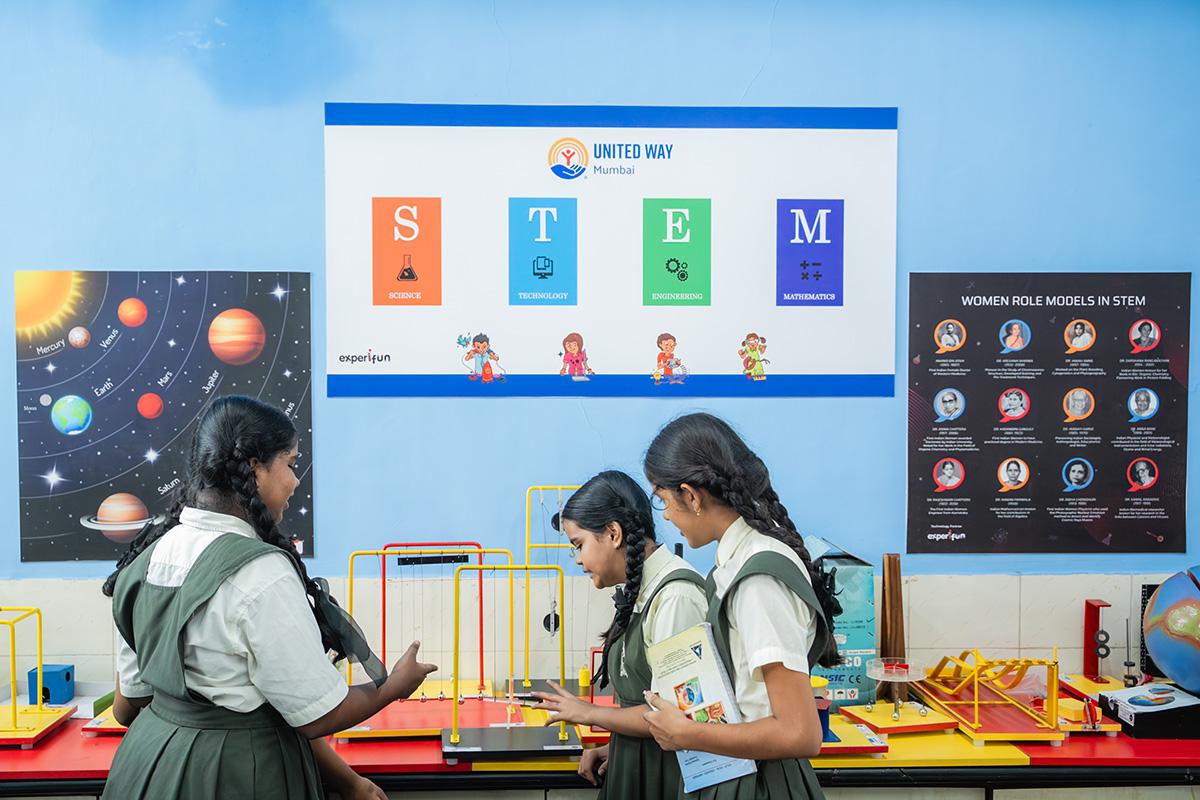
Morgan Stanley’s work under the education pillar focuses on partnering with various charities that aim to strengthen public school systems through advanced pedagogy, future-ready skills, technology-enabled infrastructure, and STEM education. Other programs include initiatives such as providing early interventions to help children develop 21st-century skills by integrating play into learning and bridging the STEM education and skills gap across government schools in Bengaluru and Mumbai.


In support of Morgan Stanley’s commitment to child safety and the belief that every child deserves the opportunity to learn and grow with confidence and security, the Firm also supports a Mumbai-based charity dedicated to preventing child sexual abuse. This is done through age-appropriate classroom sessions for children and caregivers.
India’s 2% Corporate Social Responsibility (CSR) Law: Aligning Mandate With Mission

India is the first country in the world to mandate CSR. Under a 2014 law, companies above a certain threshold must spend at least 2% of their average net profits from the previous three years on CSR activities. This law is aligned with the United Nations Sustainable Development Goals, which provide a universal framework for sustainable development.


“Giving back is an important core value and India’s unique 2% CSR law provides a strong framework to create meaningful, long-term impact. By aligning our efforts with the Firm’s global philanthropy focus areas, national priorities, and local needs, we are committed to working with our charity partners to create lasting change in our communities, strengthened by the active involvement of our employees,” says Nikita Shah Mascarenhas, India Head for Corporate Affairs, Morgan Stanley.  


Providing Access to Healthcare: Building Healthier Communities

When Rahul, a teenager from a rural part of Karnataka state, was diagnosed with acute lymphoblastic leukemia, his parents—who made ends meet as a farmer and as house help— were overwhelmed not only by the diagnosis but with the financial and logistical hurdles of getting treatment. The nearest treatment center was 650 kilometers away, an eight-hour journey from their home.


Morgan Stanley-supported NGO CanKids stepped in, providing patient navigation and care coordination services, financial aid for chemotherapy, surgery and medication, as well as accommodation near the hospital during treatment.  Rahul also got support so he could keep up with his studies during long hospital stays and his parents received counseling to help cope with the toll of their son’s cancer diagnosis and treatment.


“In India, far too many children with cancer still face barriers to timely diagnosis, treatment, and financial protection. Through a universal health coverage and equity lens, our goal is to bridge that gap so that every child, regardless of geography or income, has an equal chance of survival,” says Poonam Bagai, Founder and Chairman of CanKids.  “This means not only addressing medical needs, but also supporting the emotional, nutritional, and logistical challenges faced by affected children and their families.”


Morgan Stanley’s Health initiatives center on improving health outcomes for children and communities by enhancing access to quality care—including cancer treatment—by supporting pediatric cancer care through multiple charity partners. Outside of cancer-centered care, the Firm also supports additional health interventions in underserved urban communities to improve maternal and child health in collaboration with government systems by providing on-site services and free medicines through mobile health vans. For many patients, this is the only opportunity they have to see a doctor. By providing easier access to medical attention, patients’ immediate needs are addressed, referrals are made when necessary, and chronic conditions are identified and managed on an ongoing basis.


Natural Resource Restoration: Every Drop of Water Counts

Bengaluru was once known as the “City of Lakes,” with over 900 bodies of water. Over the past few decades, urbanization, pollution and other factors have collectively reduced this number by 76%. As the city grew into India’s tech capital, many lakes dried up or were lost to encroachment, and groundwater levels plummeted. For families in neighborhoods like Yelahanka in the city’s North, the threat of taps running dry became a daily reality.


Morgan Stanley partnered with United Way Bengaluru to revive Devarekere Lake through the “Wake the Lake” project and conserve millions of liters of water through the NGO’s “One Billion Drops” initiative.


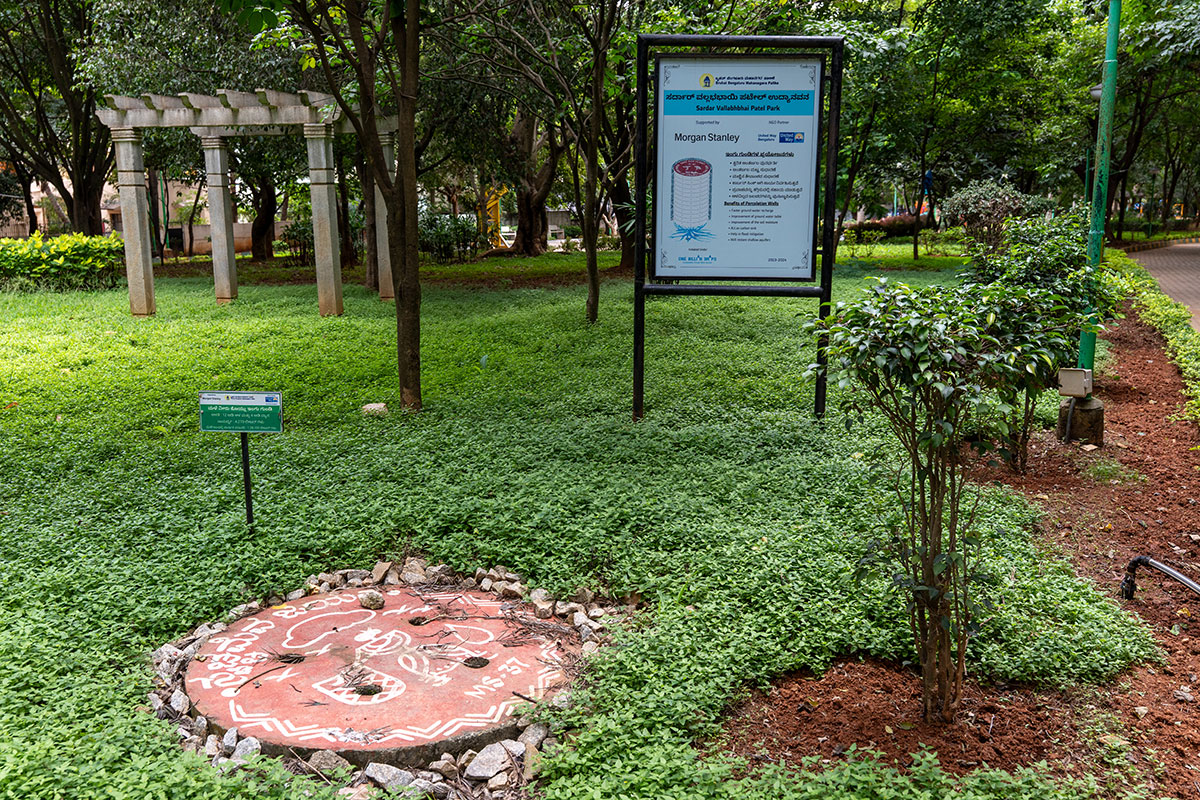
Morgan Stanley has helped revive crucial reservoirs through lake restoration and by funding the build-out of 900 percolation wells across 24 parks and public areas to capture rainwater. Overall, these efforts have helped restore plants and wildlife and created public green spaces enjoyed by local communities, whose participation in the initiatives have helped drive their success.   

Disaster Relief and Rehabilitation: Rebuilding with Resilience

As a daily wage laborer from Wayanad district in Kerala, Baiju lived in a single room made of torn plastic sheets with his wife, Beena, and their young daughter.


Their lack of basic protection exposed them to the elements during the area’s heavy monsoons, resulting in soaked bedding and uncomfortable living conditions that were made worse by a lack of indoor plumbing and a limited access to clean water.


Working with United Way Mumbai, Morgan Stanley helped Baiju’s family and others whose homes were devasted by monsoon flooding by supporting a building initiative to provide transitional shelters—built from bamboo, fly ash blocks and easy-to-maintain mud plastering.


The rebuilding process was a community effort: Residents learned construction techniques, participated in building their own homes and gained skills they could use to help others. This sense of ownership and empowerment rippled through the community, turning victims into active agents of recovery.


“For families like Baiju and Beena’s, disaster relief is more than a response—it’s a pathway to recovery, resilience, and renewed hope for the future,” says George Aikara, CEO, United Way Mumbai. “Their story, and those of countless others, show how Morgan Stanley’s approach to disaster relief is helping communities rebuild their lives with dignity and strength.”