When Your Personal Brand is Your Life

Cybersecurity lessons for celebrities from a former National Security Agent.

One morning, you try to log in to your social media. You can’t. You restart your phone; you try everything. But nothing works. Then the message arrives: Your accounts have been seized. Hackers are demanding a ransom. If you don’t pay, they’re going to post a deepfake to your account, speaking in your voice, saying things you never would.


A few years ago, this might have sounded like an episode from your favorite sci-fi series. Today, it’s a very real threat.


While anyone can be targeted, the stakes are existential for athletes, entertainers, influencers, high-level corporate executives, and anyone else whose brand is inseparable from their work. For them, social media isn’t just a platform — it’s a business. When it’s compromised, reputation, influence and opportunity can be tarnished in an instant.


Few people understand this threat more intimately than Rachel Wilson. Before joining Morgan Stanley Wealth Management as Chief Data Officer, Wilson spent nearly two decades at the National Security Agency (NSA), running counterterrorism operations and leading cyber-exploitation missions against nation-state adversaries.


In conversation with Sandra L. Richards, Morgan Stanley’s Head of Global Sports & Entertainment and Segment Sales & Engagement, Wilson shares how the threat landscape has evolved, what it takes to safeguard clients, and why cybersecurity is now a business imperative.
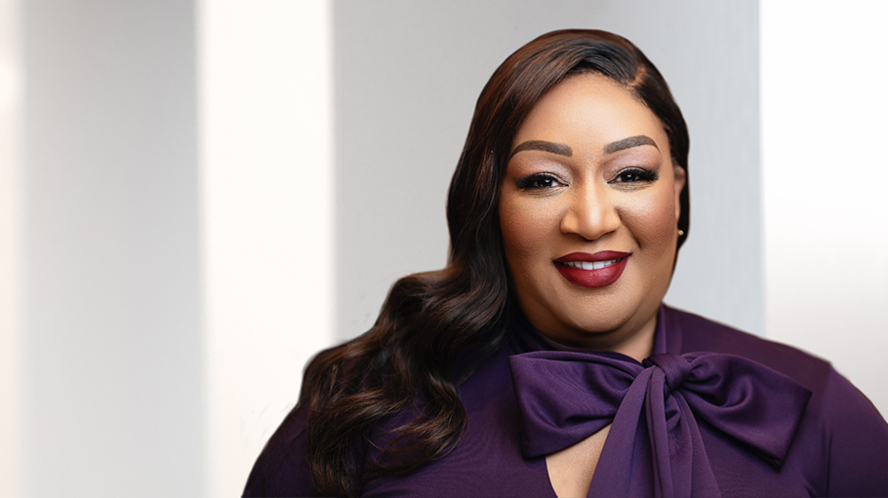
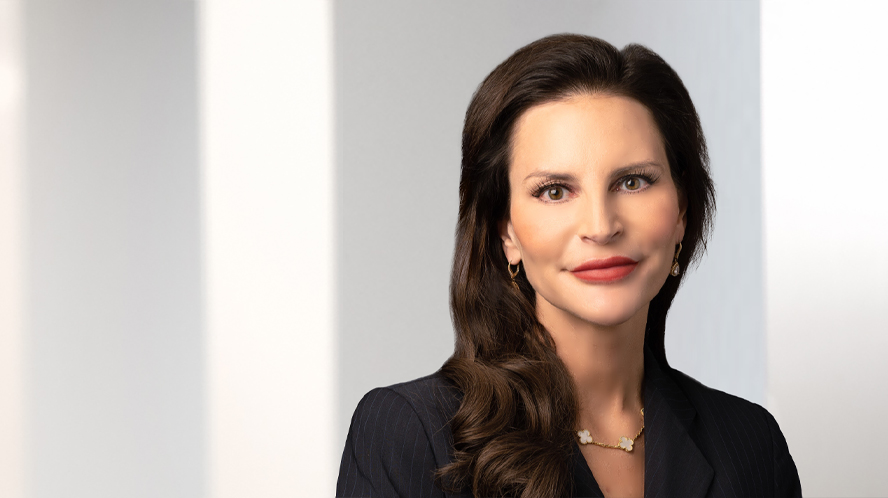
 

SANDRA RICHARDS: 

Rachel, your current role at Morgan Stanley is incredible — but before this, you spent nearly two decades at the NSA. Can you give us a sense of what that was like?


RACHEL WILSON: 

Sure. My NSA years were all about offense. I spent nearly two decades going after some of the most sophisticated cyber actors in the world. Some periods I was “worldwide ready” — able to deploy anywhere in less than a day. Malaria pills in my bag. No questions asked. Other stretches, I headed up counterterrorism missions that went on for weeks without pause. Overall, the experience taught me what it means to operate at the highest level under extreme pressure. And it gave me a unique understanding of how attackers think and act. Now at Morgan Stanley, I apply that same mindset defensively.


SANDRA RICHARDS:

It seems like the cyberthreat landscape has changed dramatically over the past decade. What’s changed?


RACHEL WILSON:

The overarching difference? Barrier to entry. Ten years ago, mounting a sophisticated cyberattack required highly specialized training in covert operations and deep access to nation-state tools. Today, that barrier is much, much lower. Artificial intelligence (AI), large language models, open-source tutorials — they allow hackers to operate at a scale and speed we’ve really never seen before. To put it in perspective: if you combined all cybercriminals into a single country, their “economy” would be the third largest in the world.

It’s not only A-listers. College athletes with large NIL (Name, Image and Likeness) deals, influencers, musicians — they’re all at risk.

SANDRA RICHARDS: 

That sounds scary for anyone, but for high-profile clients — pro athletes, entertainers, executives — what should they be mindful of?


RACHEL WILSON:

It’s one of the same characteristics that make them successful: visibility. Everything they’ve shared — interviews, posts, appearances — creates digital breadcrumbs. Hackers use those crumbs to craft deceptive attacks. Sometimes they go straight after the client. Maybe holding their accounts for ransom, or sending a phishing email that looks like it came from a sponsor or a league office. Other times, they’ll target the client’s family, friends or even fans.


SANDRA RICHARDS:

So, what I’m hearing is, it’s not just about being attacked. It’s about being weaponized.


RACHEL WILSON:

Exactly. A lot of people still think of cybercrime as simply stealing data — credit cards, Social Security numbers. But for those in the limelight, it’s often about weaponizing the trust they’ve built with their audiences. Especially with AI, it’s becoming harder and harder to tell what’s real and what’s fabricated. We’ve even seen cases where a celebrity’s own family members were unknowingly engaging with AI-generated personas, fully convinced they were real. If the inner circle can’t tell, then who can?


SANDRA RICHARDS:

So true. And it’s not only A-listers. College athletes with large NIL (Name, Image and Likeness) deals, influencers, musicians — they’re all at risk. So, let’s turn to solutions. Where should someone start?


RACHEL WILSON: 

Start with the basics. Strong, unique passwords. Add Multi-factor authentication on every account. Locking down your credit. Those aren’t “nice to haves.” They’re the foundation. From there, we can layer in monitoring, training and response planning. Think of it like training for your sport — fundamentals come first.

We treat cybersecurity as a core service. We employ over 50 former NSA specialists and continuously raise the bar with advanced forensics, AI-driven monitoring, and prevention-first strategies. It’s a white-glove, 365-days-a-year operation. And that’s really what it takes.

SANDRA RICHARDS: 

And how about the pros? What does defense look like at an elite level?


RACHEL WILSON: 

Well, I can tell you what we do at Morgan Stanley. We treat cybersecurity as a core service. We employ over 50 former NSA specialists and continuously raise the bar with advanced forensics, AI-driven monitoring, and prevention-first strategies. It’s a white-glove, 365-days-a-year operation. And that’s really what it takes.


SANDRA RICHARDS: 

What’s one piece of advice you give to clients who may not think of themselves as “targets”?


RACHEL WILSON: 

Don’t confuse luck with security. Just because you haven’t been hit yet doesn’t mean you’re safe. Complacency is the biggest risk. The good news is that with the right awareness and safeguards, you can dramatically reduce your chances of becoming a victim.


SANDRA RICHARDS: 

Last question — since we’re speaking from a wealth management perspective here – what role do Financial Advisors play in protection?


RACHEL WILSON: 

Technology matters, but that doesn’t mean trust doesn’t. For all the AI in the world, it’s the human network and connection that are often a key line of defense. Advisors know their clients — their habits, routines, relationships, instincts. That familiarity can be the difference between spotting a red flag early and missing it until it’s too late. When your reputation, your business, and your legacy are on the line, “too late” is not an option.

Security Center

Learn more about cybersecurity

Report an Online Security Concern

If you suspect you may be the victim of fraud or identity theft, or if you notice suspicious account activity or receive a questionable email or text that appears to be from Morgan Stanley, please contact us immediately at
888-454-3965
(24 hours a day, 7 days a week)
For international clients, please contact your Morgan Stanley Client Representative immediately to report any online fraud or security concerns.