Thoughts on the Market

How Long Can Markets Ignore the Oil Supply Shock?

May 6, 2026

How Long Can Markets Ignore the Oil Supply Shock?

May 6, 2026

Despite the historical energy disruption from the Iran conflict, stocks are back to record highs. Our Global Head of Fixed Income Research Andrew Sheets and our Head of Commodity Research Martijn Rats discuss different views and fundamentals driving markets.

TotM

Transcript

Andrew Sheets: Welcome to Thoughts on the Market. I'm Andrew Sheets, Global Head of Fixed Income Research at Morgan Stanley.


Martijn Rats: I'm Martijn Rats, Head of Commodity Research at Morgan Stanley.


Andrew Sheets: Today: oil, oil inventories, and the price at the pump.


It's Wednesday, May 6th, at 2pm in London.


Martijn, it's great to talk to you. We remain in this very unique market where on the one hand, the energy market is severely disrupted. On the other hand, we're making new all-time highs in the stock market. And part of this debate is a creeping sense that maybe the energy market is just a lot more resilient than many people initially thought.


So, let's just jump right into it. As you look at the current state of the world, the state of things, how are you seeing the energy market at the moment?


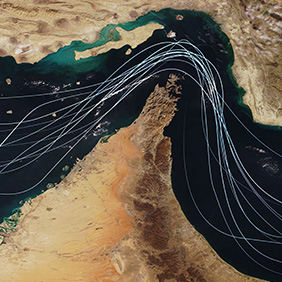
Martijn Rats: There are definitely two views in the market. I would say commodity specialists, oil traders, people that trade oil and gas equities for a living, tend to focus on the size of the supply shock. And it is neither hyperbole nor disputed that the size of the supply shock is the largest in the history of the oil market.


We have the statistical data to back that up. That is not a controversial statement.


But at the same time, the other view in the market, generally held by your generalist investors who invest across many markets. They tend to focus on the likelihood or possibility that this supply shock might also be uniquely short. It was there all of a sudden, from one day to the next, the strait was closed. It felt a bit man-made, so to say. It was an outcome of a political decision, and that can also be undecided.


And so, this is – the to-ing and fro-ing in the market is like; on the one hand, this shock is very, very large. But the other hand it may also be very, very short. Now we went into this supply shock, arguably well-prepared. In the sense that during the course of like late 2024, all of 2025, and the very early part of 2026, we were telling a story of oversupply surplus. And on top of that, given the military buildup was going on in January and February, a lot of countries in the Arabian Gulf – Saudi Arabia, the UAE, Kuwait – like visibly put out a lot of oil at sea.


So, in the oversupply of 2025, we put oil in storage in lots of places that we can't always see. But that seems very likely. Oil in the water was very, very high. So, we have been living off these buffers, and that has helped. And then, yeah, at any point in time, there were good enough reasons to assume that on a timeframe of a couple of weeks, this would largely be resolved. We would eat into these buffers, draw some inventory.


And it has been hard for the market then to really capitalize the size of the supply shock and say, "Yeah, really oil prices need to spike very, very high." And in that sense, left with this significant supply shock, but we haven't taken out the highs that we saw in 2022, for example.


Andrew Sheets: So maybe a way to think about this, right, is that if we imagined all of that oil as sitting in a big tank. We've kind of stopped a lot of the flow into the top of the tank as the Strait of Hormuz has remained closed. But oil's still able to drain out of the bottom, kind of, like normal because that tank is being drained. Those inventories have been drawn down. Maybe that's a quite a crude analogy, to forgive the pun.


But how long can that last? I mean, if we think about these inventories, if we think about the speed of which they're being drawn down, and I think that's an important point that you mentioned, that these inventories were unusually high going in. But they're obviously not unlimited.


Where does that stand? And I guess, you know, what is the limit of that? How long can those inventory draws last?


Martijn Rats: Yeah. To say that this is the billion-dollar question would be understating it, Andrew. It's also a usually complicated question to answer in the sense that it depends very heavily on the region, on the product that you're looking at. Jet fuel in Europe, NAFTA in Asia, you might see something sooner. But other products in other regions, you know, might take longer.


We often don't really know where the operational limitations of inventories are. Globally, we see something like 8 billion barrels of oil in some form of storage. That is an enormous amount. We can't draw that down to zero because a lot of that is there for operational, like working capital type reasons. Just to facilitate the operations of the industry. Is the floor seven? Is the floor six? These things are hard to answer.


Andrew Sheets: You’ve got to have some oil in the pipeline to make the pipeline flow…


Martijn Rats: Exactly, exactly. You can't operate a refinery if you don't have at least some storage right next to it. It just doesn't work. So, these things are hard to know,. But I would say, that we are eating through these buffers very, very re-rapidly now. Oil on water has largely normalized and is no longer elevated.


We are seeing very large inventory draws across every data point that we have on refined products. Refined products are universally drawing. On crude, the data is more patchy. But we are seeing large inventory draws now coming through in the United States. I would say, and this is partly having worked with this data for a long time and sort of developing some market feel rather than very analytical spreadsheets, so to say. But I would say that if the flow of oil through the Strait of Hormuz does not resume on the sort of next four to six weeks, will get very, very tight by, by June, early summer.


And, well, look, I mean, from there, it's simply… You know, if you then were to forecast. You know, project forward from there on. It would be getting tight by August, September. But of course, that's done under the assumption that the flow remains impaired over that period, which I would say most market participants would not assume at the moment.


Andrew Sheets: And another point that comes up sometimes, at least in my conversations, is, ‘Oh, but, you know, maybe Venezuelan oil is going to be coming online.’ There's more investment. The U.S. seems very focused on increasing oil output in Venezuela. You know, can that match in any sense the scale of what we've had disrupted here?


Martijn Rats: No, that is a complicated issue in the sense that, you know, growing oil production takes time. It takes capital, it takes equipment, it takes a lot of people. Venezuela at the moment, produces a bit more than a million barrels a day. I'd have to say, like, relative to the size of Venezuela's production, the last two monthly data points have actually come in better than expected. But you're talking about 100,000 barrels a day, 200,000 barrels a day, that sort of thing. Relative to a supply shock that is 13 - 14 million barrels a day.


The fastest ever single amount of production growth of any country in any year was 2018. U.S. shale with natural gas liquids included grew 2 million barrels a day in a single year. But yeah, even that…


Andrew Sheets: So, 2 million barrels relative to 14 million barrels lost is…


Martijn Rats: Yeah, exactly.


Andrew Sheets A drop in the bucket


Martijn Rats: And that had a huge run-up of several years of putting the infrastructure in place to do that. I mean, it…. You don't turn it on a dime either. So no, that remains difficult.


Andrew Sheets: So, you know, maybe a dynamic to close with is actually another way that I think people care about the oil price, you know, besides their portfolio – which is they drive.


And, you know, you had a great stat in your report that one out of every 11 barrels of oil that's produced ends up in an American car. And U.S. is a big producer. Its inventories have been drawing down. There are clear signs that the U.S. is exporting a lot of energy, and as a result, gas prices are also going up in the U.S.


So, you know, what… If you could just talk a little bit about the move in gasoline and maybe, you know, I think this could be a good segue into this idea of distillates into, kind of, parts of refined product. And how those prices can deviate or not from the barrel of oil we often talk about. And then even just more generally, kind of what is the price at the pump that people might need to think about as you head into the summer – assuming, you know, this conflict is still somewhat uncertain.


Martijn Rats: Yeah. So, the United States is very interesting at the moment. In the sense that the regular discourse about the United States is that the United States is energy independent because it is a net oil producer. And at the most aggregate level, that is correct. But that doesn't mean that the United States is not connected to the rest of the world from an oil market perspective. I would say actually it's the opposite.


The U.S. oil market is deeply connected to the rest of the world. It is a net exporter because there are very large imports, and there are very large exports, and it just happens so that the exports are a little bit bigger than the imports. So, it's a net exporter.


But flows in both directions exist for every product – for crude, for diesel, for gasoline. So, the U.S. should be the last place to have physical disruptions because the supply is close to home. But in the end, it's so connected; that in the end, there's only one global oil price – and we all pay it, including in the United States.


Now, because of the deficits at the moment, in Asia, to [an] extent in Europe, there is a very large pool on oil from the United States, and we're seeing that across the board. Crude oil exports were 4 million barrels a day, at the start of the year. They're now running sort of 5.5, even 6 million barrels a day. So, there's a lot of crude being pulled out of the United States. That is partly also the SBR release, the release from the Strategic Petroleum Reserve. But the export's very, very large.


Another product where that is also happening is in gasoline. Now, the gasoline market in the United States has a degree of complexity to it in the sense that the U.S. is a big importer of gasoline in the East Coast and the West Coast, but then a big exporter from the Gulf Coast.


Andrew Sheets: Hunh! Okay. Yeah.


Martijn Rats: Net-net, it's an exporter, but in the East Coast and the West Coast, big, big importer. Now, in Europe, for example, we are normally long gasoline, short diesel. We export our surplus to the U.S. East Coast. But, at the moment, it's tight in Europe, so we're not exporting that much gasoline. So, imports in the United States have dropped a lot.


At the same time, Asian customers, Brazilian customers, Mexican customers [are] pulling a lot of gasoline out of the Gulf Coast. And as a result, the net exports are unusually high for this time of the year. On top of that, the Strait of Hormuz issue has tightened the diesel market so much relative to the gasoline market that it is favorable for refineries to maximize their diesel output over their gasoline output.


Andrew Sheets: Hmm. And these are decisions you can make in terms of how you crack that barrel in a refinery and split it up.


Martijn Rats: Yeah, exactly. Within a relatively narrow window, but you can make tweaks that are significant. Now, normally, we're going into this summer driving season, refineries switch from what we call max diesel to max gasoline. At the moment, they are not doing that.


Andrew Sheets: Mm.


Martijn Rats: So, you have low gasoline production, and you have large net exports of gasoline. Over the last 11 weeks already, we have seen a very significant, very significant decline in gasoline inventories in the United States. And prices have risen at the pump. The nation's average is now $4.50 per barrel, as of reports this morning.


The summer driving season has yet to start. That can become $4.70, $4.80. That can become $5. Above $5 is historically a point where people get, yeah, worried about demand destruction. And it has a real impact.


Andrew Sheets: Well, Martijn, I think this remains such an important and interesting story. And even if, you know, it can seem sometimes like the market has moved on to other things, clearly there are a lot of other factors driving the equity market.   It remains pretty historic, pretty significant, and pretty complicated.


Also, something that I think, you know, affects the day-to-day spending and lives of a lot of people out there.


So, Martijn, again, thank you for taking the time to talk.


Martijn Rats: Thank you.


Andrew Sheets: And thank you, as always, for your time.


If you find Thoughts on the Market useful, let us know by leaving a review wherever you listen, And also tell a friend or colleague about us today.


Hosted By
  • Andrew Sheets and Martijn Rats

Thoughts on the Market

Listen to our financial podcast, featuring perspectives from leaders within Morgan Stanley and their perspectives on the forces shaping markets today.

Up Next

Kevin Warsh, President’s Trump’s nominee for the next Fed Chair, testified in front of the Senate...

Transcript

Andrew Sheets: Welcome to Thoughts on the Market. I'm Andrew Sheets, Global Head of Fixed Income Research at Morgan Stanley.


Today on the program, a first look at potentially the next Fed chair.


It's Friday, April 24th at 9am in New York.


Financial markets can often struggle to keep track of more than one story at a time – and at present, we're really pushing the limit. At one end, the Iran conflict continues to create a historic disruption in global energy markets. At the other, signs of corporate animal spirits and activity hint at the potential for an even larger boom if this disruption ends.


Merger activity, capital spending, loan growth and earnings growth are all strong and accelerating. And so, into this mix enters a third story, the Federal Reserve. Indeed, both Iran and the investment boom introduce real questions as to how a central bank should react to these factors.


For example, if oil prices spike further, should the central bank raise interest rates to counter the inflation that would follow? Or should it lower them because that increase in oil prices could potentially hit growth? And what about corporate aggression? As that aggression increases, should the Fed look to raise interest rates and take away the punch bowl, so to speak, to avoid an even larger overheating in the economy? Or maybe all of this investment will create abundance – actually lower prices and warrant interest rate cuts.


These questions will weigh on the Fed and, in particular, Kevin Warsh, who has been nominated by President Trump to be the next chair of the Federal Reserve. This week saw Warsh testify in front of the Senate as part of that process, giving us the most detailed insight into his current thinking that we've had so far.


Two things really stood out. First, Warsh believes that this historic boom in AI and technology investment really is likely to boost productivity. A productivity boost, all else equal, should mean a greater supply of goods and services into the economy from the same number of workers; and thanks to that greater supply, relatively lower prices and less inflation. This belief in investment driven productivity underpins why he thinks interest rates can be lower even if current inflation is elevated.


Second, Warsh was critical of the Fed, stating that it had “lost its way,” from expanding its balance sheet too much to being too slow to reign in inflation following COVID. He outlined a sweeping agenda for change, including how the Fed could forecast inflation, manage its assets, and communicate its policy.


But another challenge that's going to be facing the next Fed chair will be personal as much as it's economic. Fed decisions are made by a majority vote. And while Warsh may feel strongly that the historic investment cycle that we're seeing in technology will bring down inflation, can he convince others of this as well – especially at a time when current inflation readings are somewhat elevated? And will his criticism of how the Fed has conducted action over the last several years make it harder to gain the support of colleagues, some of whom were there for those measures? Or will it be welcomed as a breath of fresh air and a chance for the Fed to have a new start?


The uncertain timing of the handover and the fact that policy is still up to committee means that we think markets will likely stay focused on other factors in the near term and expect relatively modest shifts in Fed policy for now. But it's still worth watching.


Since 1979, only five individuals have occupied this important seat leading the U.S. Central Bank. We may be about to get the sixth.


Thank you as always for your time. If you find Thoughts of the Market useful, let us know by leaving a review wherever you listen. And also tell a friend or colleague about us today.


TotM
Our Global Chief Economist and Head of Macro Research Seth Carpenter asks Mayank Phadke, a member...

Transcript

Seth Carpenter: Welcome to Thoughts on the Market. I'm Seth Carpenter, Morgan Stanley's Global Chief Economist and Head of Macro Research. And I'm joined by Mayank Phadke, a member of my global economics team. And today we're going to talk about tariffs. I bet that was a surprise.


It is Thursday, April 23rd at 10am in New York.


I have to say, for the past couple of months, the focus on energy markets, energy supply, energy prices – that has dominated everything that we've been talking to clients about around the world. And so, everyone would be forgiven if they had forgotten that we were talking about tariffs much the same way, nonstop last year.


Now, tariffs kind of seem like an afterthought. But part of the stated motivation for tariffs when they were imposed was to boost reshoring. That is to have more production of goods in the United States that had been imported. So, tariffs still matter. They matter for CapEx, in that regard, they matter for domestic production. And because of all of that, presumably they matter for markets and for the Federal Reserve.


But for the narrow question of reshoring, the data so far, I would argue, suggests that there's been very little net effect. There will be more tariff news arriving in coming months. So Mayank, I am going to pull you into this conversation because you have been one of the key people on the team, doing of analysis on the data work on tariffs, trade and reshoring. So, could you tell us a little bit about what’s been happening to the effective tariff rate for the United States recently? And where we think that’s likely to go?


Mayank Phadke: Tariff levels have declined steadily in recent months, falling to 8.5 percent as of February, with the decline having accelerated after the Supreme Court ruling. The decision on IEEPA forced a shift in underlying tariff authorities with country level IEEPA tariffs temporarily reconstituted under Section 122.


We have long argued, even before the 2025 tariffs that the legal basis for durable tariffs would need to be anchored in section 232 and section 301 based authorities rather than in IEEPA. The current Section 122 tariffs are due to expire on the 24th of July. And after that, we expect more durable authorities to kick in. The shifts that we will see as IEEPA tariffs are replaced by new section 301 and 232 tariffs means that there will be some differences. But from a macro perspective, we expect the level to be roughly similar to where it stood at the end of 2025. An aggregate effective rate of around 10 percent.


Two sets of Section 301 investigations were announced by the administration in March, covering virtually all major trading partners. These investigations are likely to run on a faster timeline than prior efforts. Those took around nine months.


The comments were requested by the 15th of April, with hearings scheduled for early May. We're inclined to expect completed section 301 investigations over the summer while section 232 tariffs will likely arrive in waves as sector-based investigations proceed.


Seth Carpenter: Got it. Okay. So, I'm going to summarize that to say tariffs are not going away. Tariffs are here. In the aggregate for macro economists like us, probably about the same level it's been. But that escapes the question about the individual industries, and it brings us right back to this question of reshoring. Is that what's going to happen?


And so, when I think about it, we do have all these negotiations. But the reshoring question forces you to wonder about manufacturing, manufacturing growth and with it CapEx. And like I said at the top, it's non-AI CapEx that's really on the soft side of things.


So, you've spent a lot of time looking at the data. I would say one industry that tends to stand out in all these conversations is steel. So, if we look at what's happened with the steel industry, with tariffs, with changes in imports and that sort of things, what's happened? Do we see clear evidence that there's this big reshoring push?


Mayank Phadke: The case of steel is certainly very interesting. It helps frame why tariff uncertainty matters. And the supply chain for steel is relatively compact, which makes it easier to observe how the sector responds to tariffs.


Domestic production has risen as imports have fallen consistent with the idea of reshoring. But when we look at the total supply of steel to the domestic economy, it hasn't risen. More importantly, U.S. steel prices have materially diverged from global peers. And the risk of more aggressive sector tariffs across the economy, in our view is higher prices. An outcome which is consistent with our expectations from a year ago – and with economic theory.


Seth Carpenter: As an economist, I'm always happy when the reality matches what I was expecting in theory. So, that's super helpful. Now, that is one specific industry, and I know that you have spent a bunch of time looking at the data across industries.


The point that you made though, about the higher prices, the higher domestic prices for steel means, to me as an economist, that we have to try to maybe separate out the effects of the nominal versus the real. Which is to say, if we're measuring how much output there is, how much that increase is coming from just prices going up versus how much is coming from, total quantity.


So, if I asked you, when you look across industries, when you look at the data, what evidence do you see in terms of lots of reshoring. That is to say a diversion of trade, a reduction of imports, and with it an increase in domestic production. Is that there broadly in the data?


Mayank Phadke: When we look at production and imports across industries and goods and identify the industries both with and without reduced imports, we see that the increase in domestic production has come largely in nominal terms. Which means that the price has risen, but very little of that increase is actually higher output. The evidence for meaningful reassuring here is quite limited.


Seth Carpenter: Alright. So that's super helpful to me because when I think about the implications of tariffs, the economist in me says it reduces the overall productive capacity of the economy. It raises cost for the economy. The counter argument has been we're going to make more in the United States and that's going to boost the U.S. economy.


As far as I can tell, when we look at the data themselves, there's not a lot of evidence for the upside. But there is clear evidence that we're raising costs for the U.S. economy.


Alright, well Mayank, thank you so much for joining me. And thank you to the listeners. If you enjoy this show, please leave us a review; and share Thoughts on the Market with a friend or a colleague today.


TotM

More Insights