Big Ideas and Bold Pitches

Feb 18, 2026

Meet the startups and nonprofits backed by Morgan Stanley in 2025 that pitched investors in New York and London during the latest Showcase & Demo Day.

Morgan Stanley Inclusive & Sustainable Ventures hosted its annual Showcase & Demo Day in New York and London, bringing together early-stage startups and nonprofits that are driving innovation across enterprise software, healthcare, process optimization, fintech and environment.  Demo Day represents the culmination of a five-month in-house accelerator that provides capital, mentorship, tailored curriculum and access to investor networks.


Morgan Stanley’s Inclusive & Sustainable Ventures 2025 cohort included twenty-nine startups and four nonprofits, from across the Americas, Europe, the Middle East and Africa. “With founders spanning 10 countries and 13 industries, our Morgan Stanley Inclusive & Sustainable Ventures cohort underscores the potential of innovators globally to bring disruptive solutions for business and society to market,” said Jessica Alsford, Morgan Stanley Chief Sustainability Officer. “We are eager to watch as these founders continue to scale with the backing of our Integrated Firm.”


Since inception, the program has distributed over $38 million in capital to more than 140 organizations.       


Applications Open for 2026 Cohort

Applications for the next MSISV cohort of early-stage startups and nonprofits are now open, with a focus on accelerating solutions across four key impact categories: Environment, Health & Wellbeing, Economic Empowerment and Education & Human Capital. Apply now through March 31, 2026. Learn more about MSISV here.

Inclusive & Sustainable Ventures

Building a network to support innovators

Showcase & Demo Day Recap: 2025 Cohort

At this year’s Demo Day, Global Co‑Heads LaToya Wilson and Sanghamitra Karra spoke to the dedication and innovation of the 2025 cohort. “Over the past five months, our team has partnered closely with every company in this cohort—pushing, challenging and championing them as they refined their solutions and prepared for this moment,” said Sanghamitra Karra. “Startups and nonprofits succeed faster when the full Morgan Stanley ecosystem leans in.


Reflecting on the Firm’s broader commitment, LaToya Wilson noted: “MSISV is anchored in Morgan Stanley’s Integrated Firm approach—bringing together capital, content, connections and community to ensure that organizations have access to the insights and networks they need to scale.”


Enterprise Software

  • Using generative AI to streamline shipping and eliminate operational waste is the goal of Airpals (U.S.) a parcel-management platform for workplace logistics. The startup helps enterprises eliminate costly errors by automating repetitive shipping tasks, streamlining internal shipping and maintaining transportation compliance. “When employees don't have the right tools, they skip the process,” said Joshe Ordonez, Founder and CEO. “Our system recommends the best service and packaging, avoiding costly mistakes.”
 
  • Blagovesta Pugyova, CEO of Fabrico SaaS (Bulgaria) is building an intelligent system to manage production capacity, maintenance and downtime, helping manufacturers reduce costly inefficiencies and downtime, increasing capacity for greener manufacturing.
 
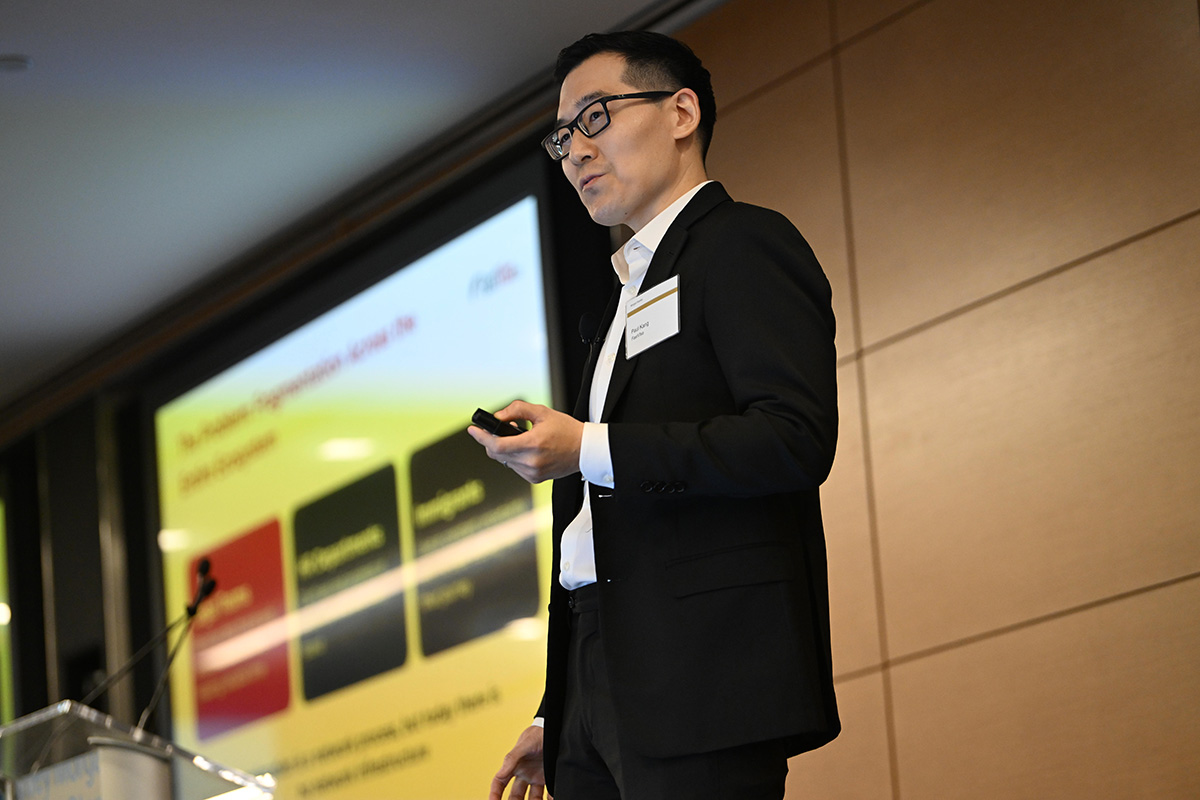
  • Paul Kang, Co-Founder and CEO of FastVisa (U.S.) said his own story as an immigrant inspired his solution for an AI-powered platform to streamline immigration workflows. The startup provides Immigration Lifecycle Management for legal and HR, serving as a hub for compliance, automation, insights, analytics and operational oversight. “There is endless paperwork, constant uncertainty and no real visibility,” Kang said. “Immigration is a network process, but today there is no network infrastructure.”
 
  • Moodbit (U.S.) is an AI agent that automates HR tasks and provides actionable insights, boosting workforce operations and reducing overhead costs. “We are transforming the HR department from a department that costs money to a department that makes money,” said Miho Shoji, Co-founder and CEO.
 
  • Employers are suddenly buried in AI-generated resumes, but when all resumes look the same, that’s not an efficient way to hire, says Sterling Smith, Founder and CEO of RightMatch (U.S.). The startup automates candidate screening for companies and agencies, integrating with applicant tracking systems to produce fast, data-driven assessments. “We have felt the pain of hiring at scale,” Smith said. 
Paul Kang, Co-Founder and CEO of FastVisa

Healthcare

  • A massive shift in elder care is coming from a growing senior population that has an increasing preference for home-based care, according to Jamie Gong, CEO of Care Hero (U.S.). The startup is an AI-powered platform and B-to-B solution connecting families with certified caregivers and resources to support seniors aging in place, creating the virtual back office that makes quality care accessible while empowering caregivers with better opportunities. “We’re starting with the biggest bottleneck there is today—caregiver recruiting and onboarding,” Gong said.
 
  • Caring Africa (Nigeria) is a nonprofit building infrastructure for Africa’s care economy by connecting families to safe, quality caregivers, supporting industry workers and advocating for care-centered policies.
 
  • Creating tiny human organs at scale has the potential to disrupt global health research by speeding up clinical testing, according to Kate Cameron, CEO of Cytochroma (UK). The startup provides optimized cell models from genetically diverse backgrounds to transform drug discovery, testing and validation—cutting preclinical timelines, saving costs and replacing animal testing. “We can model the world population in the dish the size of your phone,” Cameron said.
 
  • Spending on healthcare AI is growing, but hospitals will need to prove they are getting a return on their investment, and performance that reduces misdiagnosis and litigation risk, said Dr. Jaishree Naidoo, founder of Envisionit DEEP AI (UK). The startup enables healthcare providers to independently assess the accuracy of imaging AI models, track performance after deployment and maintain compliance with global regulations. “We are making sure AI tools can be trusted, and when the tools are trusted AI can scale and support more patients,” Naidoo said.
 
  • Arion Long, CEO of Femly (U.S.) is building a feminine care company on a mission to provide organic and accessible menstrual health products. The female “population needs these products and can’t opt out of them,” Long said. The startup expects more growth this year, driven by local legislation requiring organizations to stock feminine care products.
 
  • Fitnescity Health (U.S.) is a platform that provides easy-to-understand consumer health tests for conditions ranging from weight management and hormone level, and personalized, AI-driven analytics for consumers. “I was shocked how difficult it is to get a test as a consumer,” said co-founder and CEO Laila Zemrani, noting how the current fragmented market for these tests is keeping testing underutilized. “This is the marketplace you go to for just about any consumer health test. Out-of-pocket testing is a market with exploding demand as more and more people want control over their health,” she said.
 
  • Laura Stembridge, CEO of InsideOut (UK) spoke about how the AI-powered mental health platform can put preventative, affordable and accessible support into the hands of more people globally. The startup is a SaaS solution for employers to support employees, and healthcare providers to support patients with their mental health needs. “We’re on a mission to reinvent mental health support. Our mission is to support one billion people globally,” Stembridge said.
 
  • AI has the ability to expand capacity for healthcare clinics without scaling cost, says Dr. Harvinder Power, Co-Founder and CEO of Motics (UK), an AI operating system for healthcare clinics, saving clinicians time on administrative tasks, improving patient care and preventing medical errors. Clinics are “at capacity,” Power said. “Clinicians are often having to spend more time on operational work than with patients.”
 
  • Pelebox (South Africa) is a nonprofit that has developed a Smart Locker Dispensing System to improve last-mile access to chronic medication for patients, which traditionally has been limited by the number of available healthcare facilities.
 
  • Fertility care should be accessible anywhere says Marija Skujina, Founder & CEO of Plan Your Baby (UK), a telehealth fertility and pregnancy clinic offering personalized, end-to-end care designed with precision, helping to save time and alleviate the stress of the fertility journey. “Trying for a baby shouldn’t feel like a full-time job,” Skujina said.
 
  •  In the U.S. alone, millions of people have low vision, and organizations are losing them as customers, visitors and patrons, according to Rebecca Rosenberg, CEO and Founder of ReBokeh (U.S.). The startup provides accessibility tools to organizations to support their low-vision communities, empowering individuals to have fully visually-inclusive experiences. The company’s technology is used through a B-to-B SaaS model to “create unique, personalized and optimal vision assistance for every user, in every situation,” expanding access for more customers, Rosenberg said.
 
  • Delays in diagnosis of medical conditions is a silent crisis that can be prevented through more accessible testing, says Dr Jiawei Li, CEO of Tuli Health (UK). The startup aims to transform community pharmacies into diagnostic hubs via an Infrastructure as a Service platform, enhancing healthcare accessibility and clinical efficacy.
 
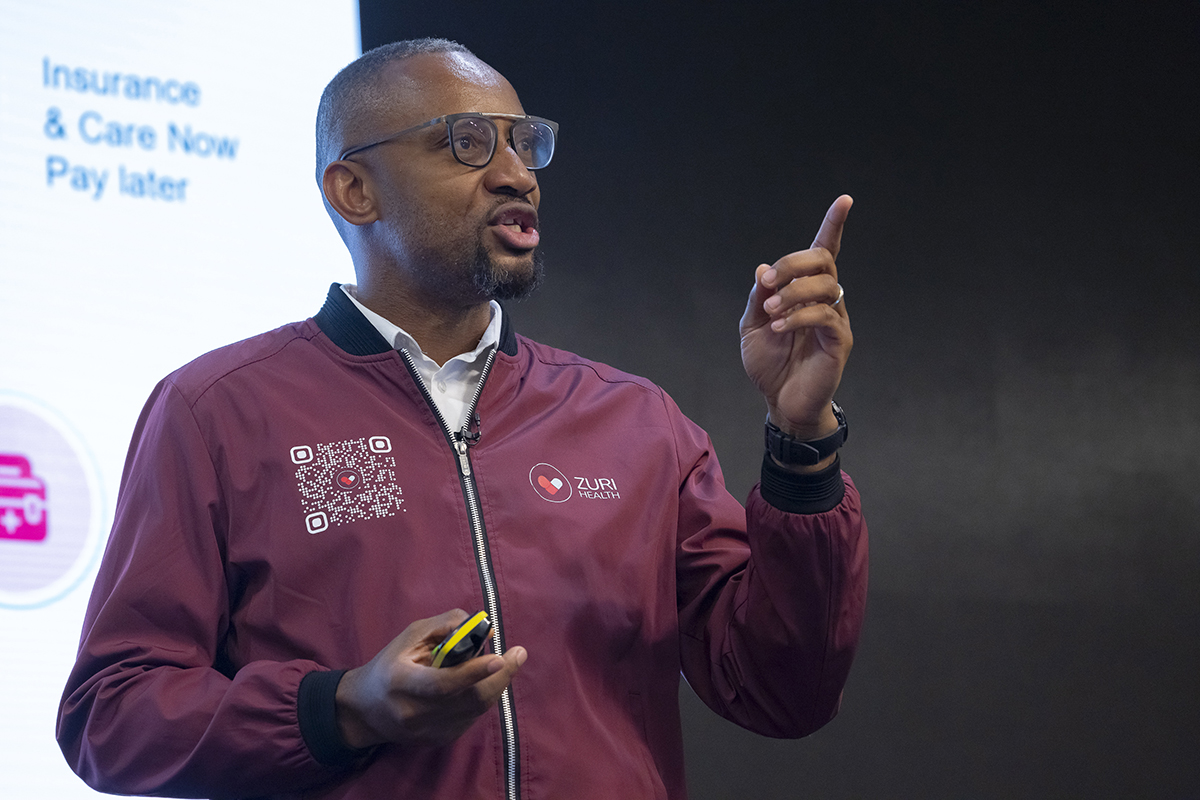
  • Ikechukwu Anoke, founder and CEO of Zuri Health (UK) is building an engine for preventative healthcare in Africa, where many people die each year from preventable diseases, and few people have health insurance. The company offers affordable, on-demand healthcare across Africa via app, SMS and chatbot, making quality care and screening both more affordable and more accessible to African communities.
Ikechukwu Anoke, Founder and CEO of Zuri Health

FinTech

  • The creators powering the social media have a market value and represent an underserved and underbanked market for financial services, according to James Jones, Co-Founder and CEO of Bump (U.S.) The startup provides content creators with tools to manage finances, understand their market value and discover new revenue opportunities.
 
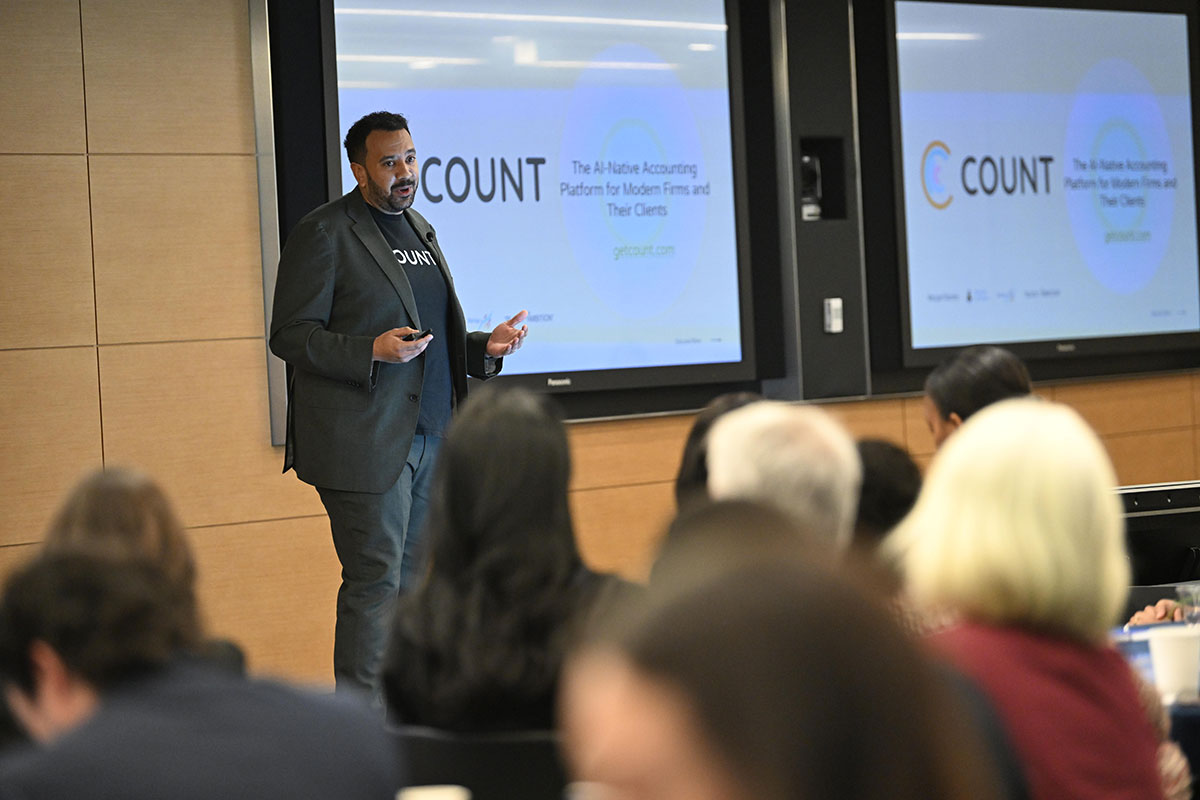
  • Reducing manual accounting errors could save companies from costly mistakes, according to Chris Smith, CEO and Technical Lead of COUNT (U.S.), an AI-native accounting platform helping accountants and small- and medium- size businesses automate bookkeeping, save time, improve accuracy and generate real-time financial insights. “The problem isn't subtle—it's structural. Accounting is still run today through disconnected systems and human memory,” Smith said. “COUNT helps firms grow and scale faster without needing to hire more people.”
Chris Smith, CEO and Technical Lead of COUNT

Process Optimization

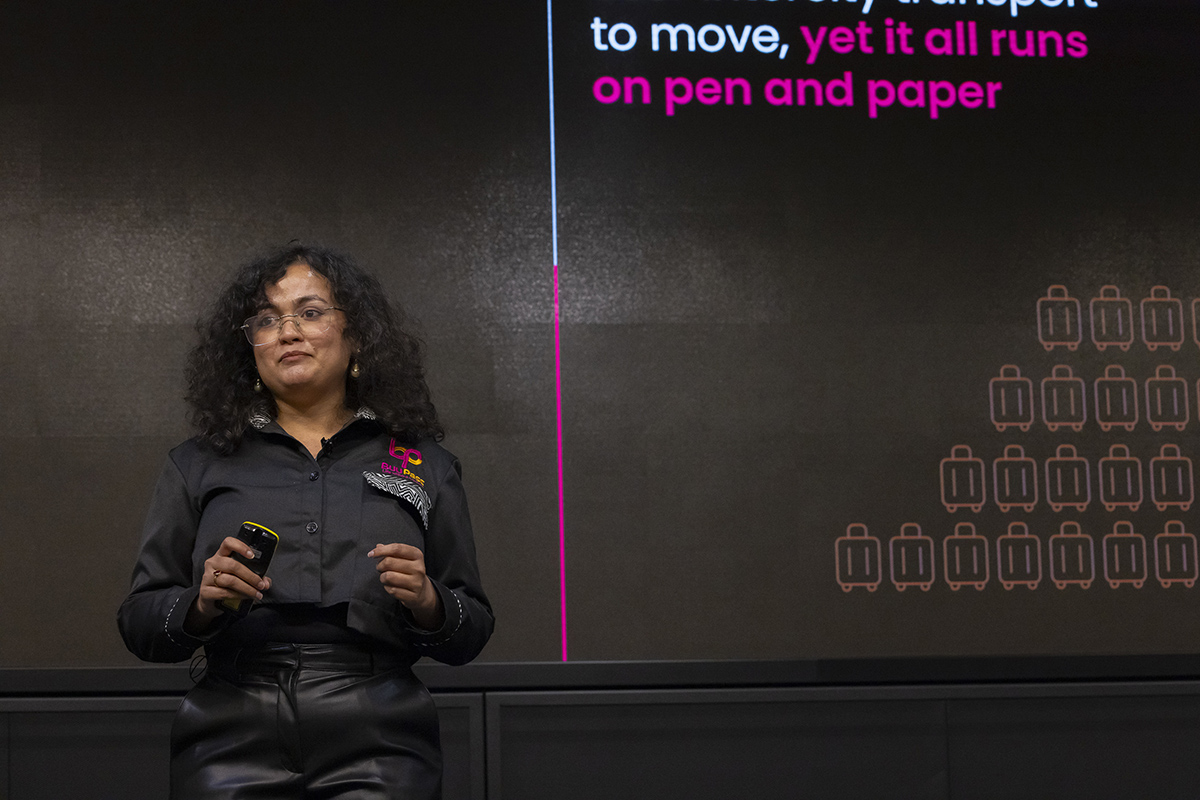
  • Across Africa, hundreds of millions of people use intercity transport, yet millions of daily transactions in the transport system run primarily on pen and paper, says Sonia Kraba, co-founder of BuuPass (Kenya), an online intercity travel platform that aims to digitize the continent’s travel system and help people book bus, train and airplane tickets. “We’re building the platform for the next billion journeys in Africa. We want to be the continent’s Expedia,” Kraba said.
 
  • In the waste industry, manual sorting and labor shortages are causing significant and costly challenges for recycling. Danu Robotics (UK) develops AI-powered robotic sorting systems, selling direct hardware to help recyclers and waste operators improve efficiency, reduce contamination and cut operational costs, said CEO Xiaoyan Ma.
 
  • Laundry deserves a better marketplace, according to Jorge Rodriguez, co-founder and CEO of HamperApp (U.S.). The startup is a tech-powered marketplace connecting residential and commercial clients with laundry professionals, offering logistics, marketing and customer support at scale, and the goal to build the nation’s largest on-demand laundry network. “We're building the infrastructure to bring thousands of laundromats online and into the 21st century,” Rodriguez said. “Customers can get food and groceries delivered with a tap, why not laundry?”
 
  • Rivet (U.S.) is an AI-marketing platform that increases direct-to-fan engagement across all channels for brand and creator teams to grow their communities and increase revenue. “We're building the new era of commerce for this generation of consumers,” said Anj Fayemi, CEO and Co-Founder of the customer relationship management direct marketing platform.
 
  • Arts and culture organizations contribute billions of dollars to the U.S. economy alone each year, but museums, aquariums, zoos and gardens are falling behind in terms of transaction software, and that’s costing them revenue and missed opportunities, says Rick Hernandez, CEO of Social Good Software (U.S.). The startup offers user-friendly software to manage transactions to cut costs and improve the visitor experience. “The systems they were using were outdated, inefficient and very difficult to use for visitors, staff and the organization,” Hernandez said. “This has a real impact on the bottom line.”
Sonia Kraba, co-founder of BuuPass

Environment

  • Citera (Canada) is an AI-powered data engine that provides building owners with automated tools to collect and manage utility data for reporting, optimization and decarbonization. “The current investments aren't moving the needle in terms of reaching energy demand,” said Daniel Lavinskas, founder and CEO. “We need to act fast.”
 
  • Severe weather events cause economic losses every year, according to Sebastian Glink, Founder and Co-CEO of CLIMADA Technologies (Switzerland). The climate-risk analytics SaaS tool is delivering actionable insights for the quantification of the financial impact of extreme weather events across the globe. “Climate change has become a financial risk. Assets are impacted by severe weather events and most other companies are only offering fragmented solutions. We fill that gap,” Glink said.
 
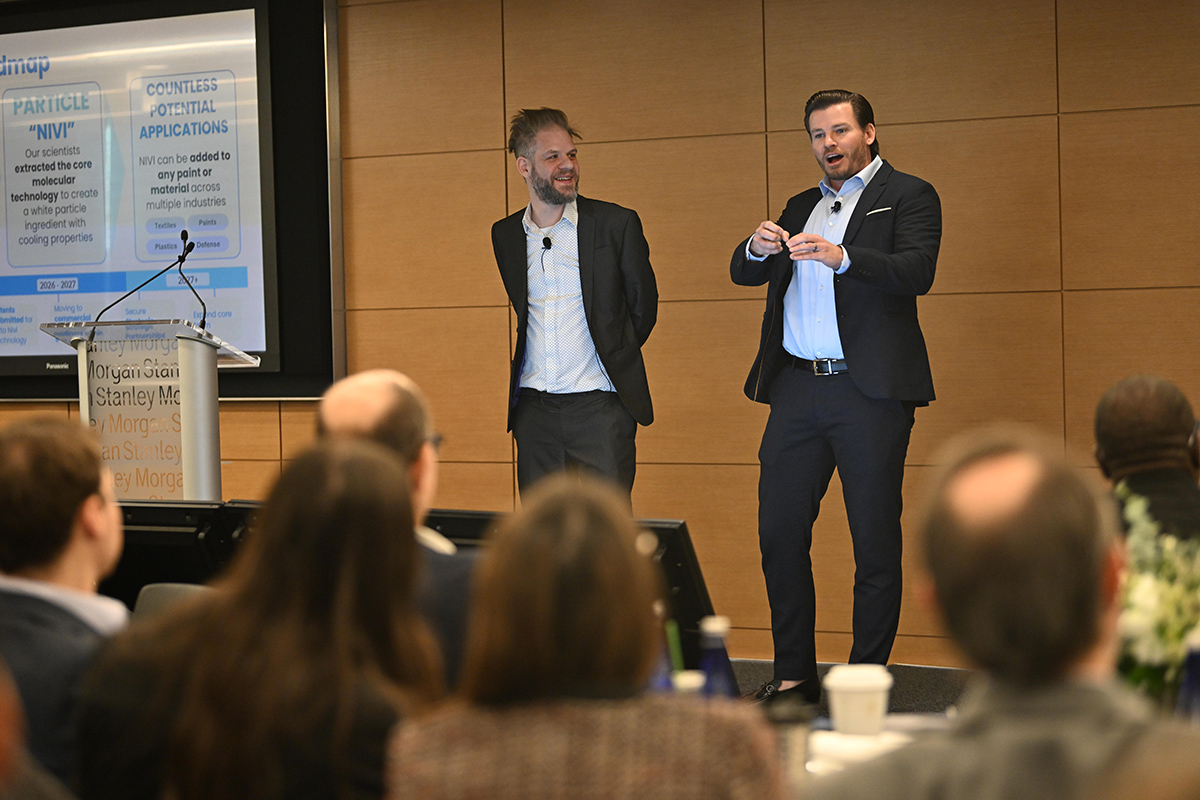
  • The earth is heating up, but the global economy won’t be able to air condition our way out of that problem, say Rob Atkin and Mike Fleming, CEO and CRO of Pirta (U.S.). The climate tech company is developing passive-cooling paints, coatings and additives to combat rising temperatures and energy costs, working with facilities from warehouses to data centers to increase energy efficiency and reduce operating costs. “Anything you can paint, we can cool,” Fleming said.
 
  • U.S. electricity demand is projected to grow sharply by 2040, and the resulting once-in-a-generation electric grid buildout has created a market for tools to improve access and standardization of residential solar development. SolarAPP Foundation (U.S.) is a nonprofit working to make clean energy more affordable and accessible by automating permitting for residential solar and battery storage technologies. “We’re standardizing that complexity and layer cake of permitting. Permitting should be easy,” said CEO Matthew McAllister, noting that the current bureaucracy and red tape in residential solar is increasing costs.
 
  • Concrete infrastructure often needs repair, and when that happens, it’s a burden for the global economy. Mimicrete (UK) is developing self-healing concrete to enhance infrastructure resilience, reduce maintenance costs and cut carbon emissions, said Co-founder and CEO Dr. Liz Zijing Li.
 
  • Eliminating fossil-fuel based packaging, such as polystyrene, and replacing it with a bio-based circular solution is the goal of S.Lab (Spain), led by CEO and Co-Founder Julia Bialetska. The company produces biodegradable packaging from agricultural waste and mycelium using proprietary technology.
 
  • A huge amount of food is either lost or wasted globally each year, said Asrar Damdam, Founder & CEO of  Uvera Inc. (Saudi Arabia), which has developed technology to give fresh food a longer shelf life without chemicals. The company’s AI-powered platform offers a service to help its customers reduce waste, optimize inventory and ensure fresher products on the shelves.
Rob Atkin and Mike Fleming, CEO and CRO of Pirta

Apply to Inclusive & Sustainable Ventures

Apply by March 31.