

 Anfang

Key Takeaways:
- The middle market private equity landscape is in the midst of real change, and the conditions that drove returns in the 2010s are no longer guaranteed
- Competition for quality assets has intensified, at the same time limited partners have become more selective about which managers they choose to invest with
- Deep subsector expertise and a differentiated sourcing strategy are critical to identifying and unlocking investment opportunities
- A proven and well-resourced value creation playbook can reduce volatility and strengthen underwriting; AI is becoming a source of measurable advantage
- A disciplined approach to liquidity generation is emerging as a point of differentiation across the middle market landscape
The Middle Market Landscape is Shifting
For roughly a decade before the pandemic, middle market private equity operated against a generally favorable backdrop. Debt was inexpensive and readily available, valuations generally rose over a five-year holding period, and exit markets were dependably open. These conditions rewarded investing discipline but also forgave missteps – a private equity fund manager (“sponsor”) who bought a good business at a reasonable price could deliver an acceptable return with little more than a ‘buy and hold’ strategy. We believe that backdrop has changed. Macroeconomic growth has slowed and volatility has risen across consumer demand, input costs, labor markets, and trade policy, compressing the margin for error.
Despite abundant capital, sustained higher costs have created a challenging borrowing environment. Record inflows have made private credit a deep and competitive financing market, yet interest rates remain well above 2010s levels. Higher borrowing costs consume more portfolio company cashflow and reduce the equity return benefit from leverage. As a result, earnings growth must drive a greater portion of private equity returns: compared to the pre-pandemic interest rate environment, the average private equity investment now needs to deliver roughly double the earnings growth to generate the same MOIC.
Dry powder remains elevated versus the 2010s, but its age matters more than the total quantum. Over $600 billion, roughly 55% of total dry powder, is now sitting in funds more than two years old, which is an all-time record (Display 1). This capital was raised under different market conditions, has been deployed more slowly than historical norms, and is now nearing the end of its investment period. Sponsors racing the deployment clock may bid more aggressively, which can lead to increased competition, irrational entry pricing, and ultimately compressed returns.
Display 1: Dry Powder and Invested Assets Have Aged to Record Levels
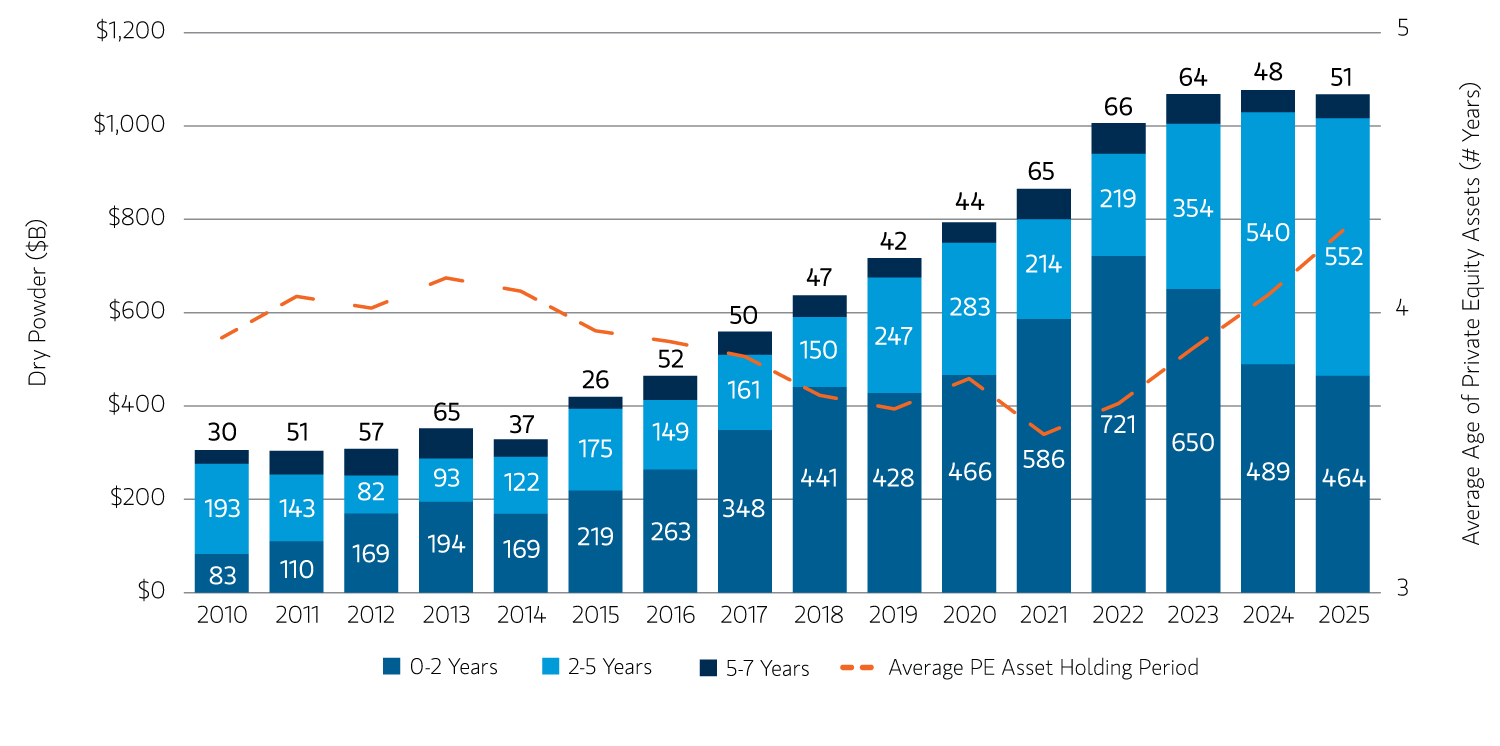
Source: Pitchbook, US Only. Dry powder data as of December 31, 2025. Asset holding period data as of June 30, 2026.
Display 1: Dry Powder and Invested Assets Have Aged to Record Levels
US Private Equity Dry Powder by Age of Fund
Transaction volumes compound the problem. Holding periods have stretched from three-to-five years to five-to-seven or more, leaving a backlog of unsold private equity assets that PitchBook estimates at more than 30,000. Even if conditions improved tomorrow, this backlog would take years to clear.
Because transaction volume is down, distributions from sponsors to their limited partners (LPs) are down with it. The median 2006-2019 fund returned 0.45x of paid-in capital by year five and more than 1.0x by year eight. Recent funds are returning capital more slowly: 2020 funds had returned 0.27x by year five, while 2021 funds had returned just 0.07x by year four (Display 2), less than one-third of the historical pace at comparable points in fund life. This shortfall has reordered LP priorities, with many now ranking Distributions to Paid-In Capital (DPI) above Internal Rate of Return (IRR). It is already visible in capital formation: fund closings have declined by nearly 40% since 2022, concentrating capital with sponsors who can show a track record of returning it.
Display 2: DPI Evolution for Recent Fund Vintages Trending Well Below Historical Averages
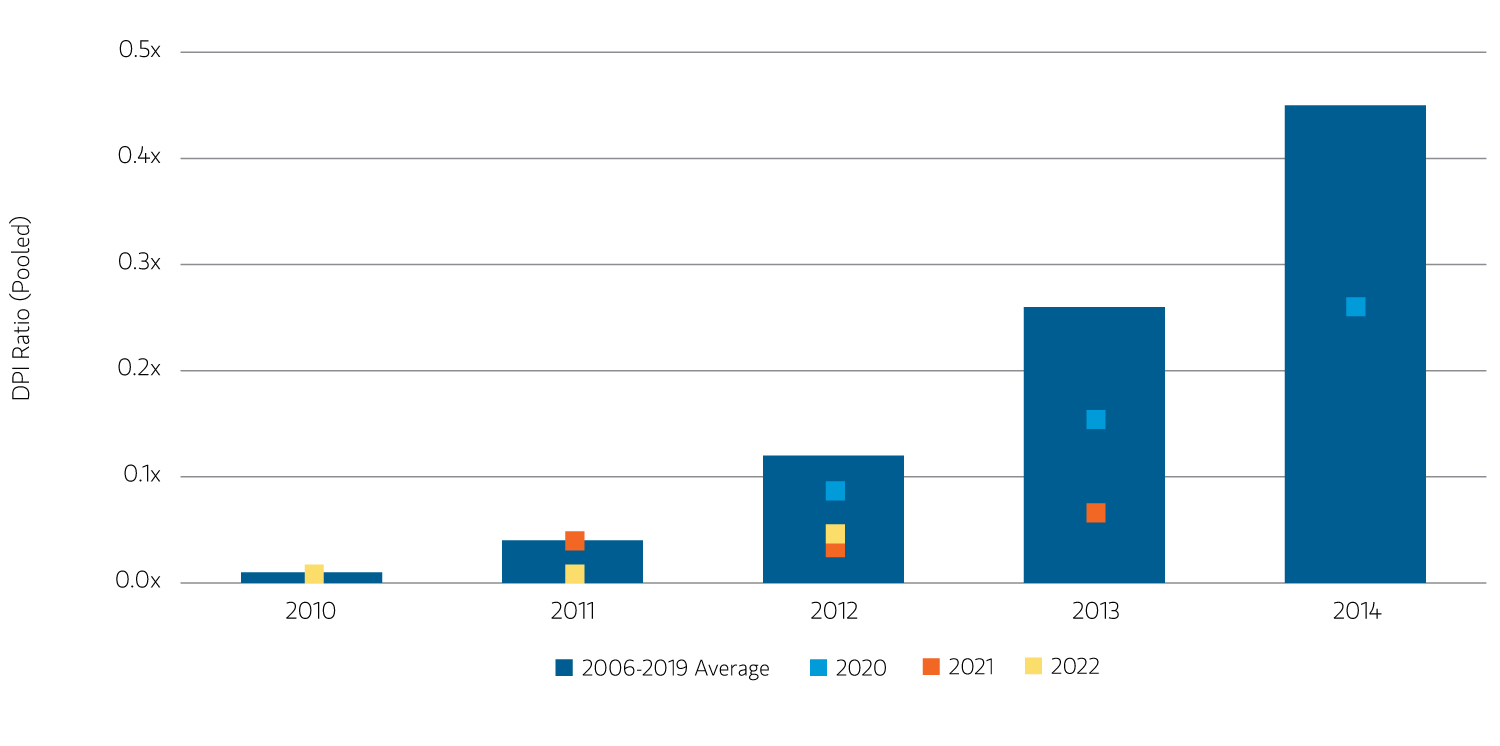
Source: Pitchbook, US Only. As of December 31, 2025.
Display 2: DPI Evolution for Recent Fund Vintages Trending Well Below Historical Averages
US Private Equity Fund DPI by Vintage
The result is a tougher market at both ends, making buying difficult and exiting even more challenging. Returns must now be earned through real EBITDA (earnings before interest, taxes, depreciation, and amortization) growth and portfolio company improvement rather than assumed from the market, which puts the burden on the sponsor to have a strong and differentiated process to source, manage, and exit their investments.
What Can Drive Outperformance
If the 2010s were characterized by a rising economic tide lifting all boats, we believe that the next decade will be the era of manager dispersion. Access to capital is no longer a differentiator given elevated levels of aged dry powder, and financial engineering is no longer a differentiator when debt financing is expensive. In our view, outperformance will increasingly be driven by the individual sponsor - strategy and focus, operating capability, and resources. We see five imperatives that, in our view, will separate top-performing managers from those who revert to mean performance.
- Detailed and Thematic Subsector Focus
- Differentiated Sourcing Strategy
- Resourced and Repeatable Value Creation
- Tangible Value Creation Through AI
- Intentional Liquidity Planning
Display 3: Dispersion in Private Equity Fund Returns Has Increased in Recent Years
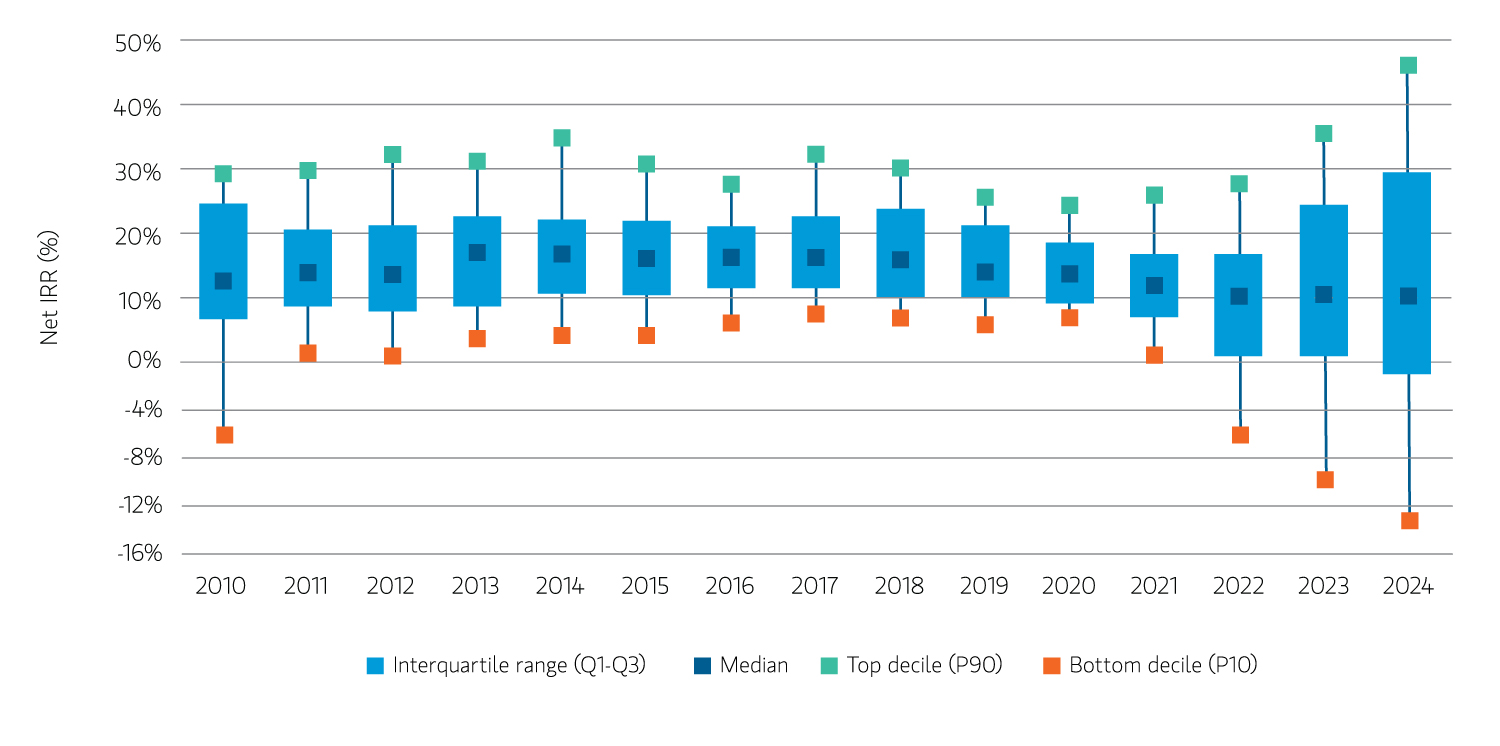
Source: Pitchbook, US Only. As of December 31, 2025.
Display 3: Dispersion in Private Equity Fund Returns Has Increased in Recent Years
US Private Equity Fund Net IRR Distribution by Vintage Year
1. Detailed and Thematic Subsector Focus
With the margin for error in entry pricing narrowed, we believe deep subsector focus has become a requirement. Sponsors with real expertise in a defined set of industries can identify opportunities before they are broadly marketed, credentialize themselves with sellers and target company management teams, and bring pattern recognition to both diligence and value creation. These capabilities compound over time and, in our view, allow sponsors to move more quickly and with more conviction than the field.
However, this is not an argument for narrow focus or single-sector specialization. Sectors move in and out of favor over time (Display 4), and a portfolio concentrated in one industry inherently displays that cyclicality regardless of individual asset selection. We believe the optimal strategy is depth across several defined subsectors rather than generalist coverage of everything or a myopic focus on one sector alone.
Display 4: Private Equity Industry Performance Has Rotated Over the Last Decade
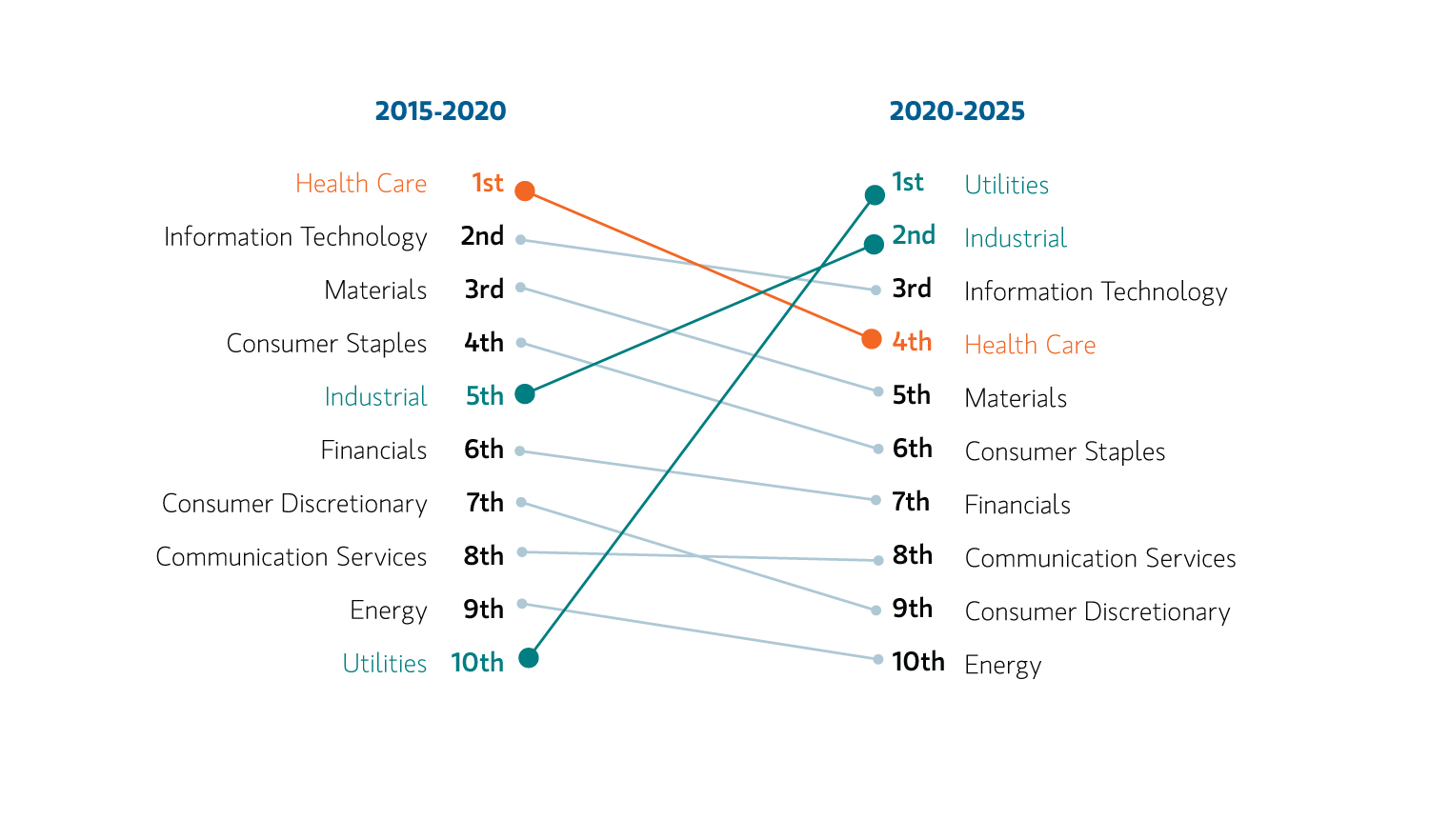
Source: MSCI Private Assets, as of March 31, 2026. 75th percentile (top-quartile) TVPI of realized exits; Real Estate and unclassified funds excluded.
Display 4: Private Equity Industry Performance Has Rotated Over the Last Decade
Composition of Private Equity Exit Returns by Sector
2. Differentiated Sourcing Strategy
Relationships with middle market intermediaries remain a critical part of successful private equity investing, and no sponsor can operate without them. We believe, however, that a proprietary sourcing engine capable of identifying and unlocking opportunities outside broadly-marketed auctions has become a meaningful differentiator. Proprietary sourcing allows for early target identification, the ability to move before the rest of the market has organized around an asset, and often an advantage on entry valuation.
The potential for an advantaged entry valuation is particularly important given the competitive dynamics discussed previously. In a private equity market where a large number of sponsors are under pressure to deploy aging capital, broadly marketed auctions create an environment that drives entry valuations up. Estimates of the valuation gap between proprietary and competitive transactions vary, but market participants generally recognize a discount on proprietary acquisitions.
A proprietary sourcing engine is not something that can be built overnight. We believe truly differentiated origination requires dedicated focus at the sponsor level, a concerted and consistent effort to build broad relationships with business owners and operators, and a long-term mindset around building and maintaining a strong reputation in the market.
3. Resourced and Repeatable Value Creation
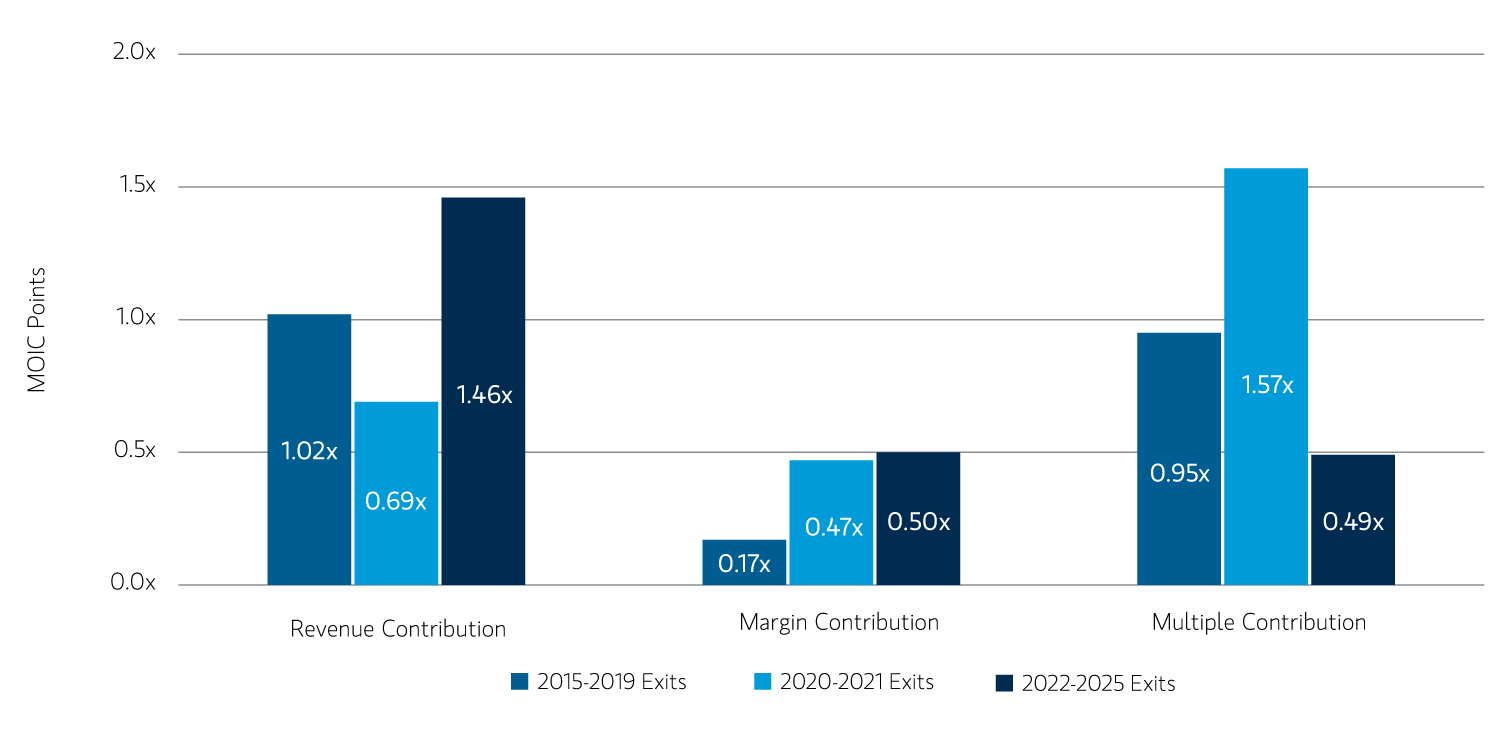
Without the benefit of financial engineering, we believe the majority of future returns must be driven by earnings growth. Recent exit data supports this: from 2022 to 2025, revenue and margin growth drove roughly 80% of exit MOIC, up from 55% in the 2015 to 2019 period, while the contribution from multiple expansion fell from 0.95x to 0.49x (Display 5). Building sustainable platforms that can drive real earnings growth is no simple undertaking in the middle market, and in our view sponsors with a dedicated team and repeatable playbook will outperform those who have neither.
The clearest dividing line, in our view, is whether sponsors rely on operating expertise deal-by-deal or have built a dedicated in-house capability. A dedicated team engaged from pre-investment diligence through exit can apply consistent expertise across core value creation levers such as commercial effectiveness, pricing discipline, procurement, and working capital management.
Developing a truly repeatable value creation approach also reinforces a virtuous cycle with a sponsor’s underwriting process by reducing outcome dispersion. A sponsor that has executed a given operational program across multiple companies can underwrite the next similar investment with more confidence than a sponsor attempting it for the first time. In an elevated pricing environment where entry pricing carries more uncertainty, we believe the ability to underwrite earnings growth with confidence and speed can be a real differentiator.
Display 5: Revenue Growth Has Been a Significantly More Impactful Driver of Return in Recent Vintage Exits
Source: MSCI Private Assets. As of June 30, 2025.
Display 5: Revenue Growth Has Been a Significantly More Impactful Driver of Return in Recent Vintage Exits
4. Tangible Value Creation Through AI
Over the last two years, we have seen Artificial Intelligence move from an interesting edge case to a genuine driver of value. The question is no longer whether AI will be impactful, but where it can be best deployed. We see two applications driving real value today. The first is during diligence, where commercially-available tools can now review an entire data room and answer specific, detailed questions almost instantly. In competitive diligence processes where speed and conviction can create real advantage, we believe that acceleration can be a genuine edge.
The second, and ultimately larger, application of AI is within the individual portfolio companies of a middle market sponsor. We see AI enabling growth, cost control, and operating efficiency in a meaningful way. Middle market businesses are frequently under-resourced and under-invested in the Technology function, which in our view makes them particularly good candidates for AI-driven improvements in pricing analytics, sales productivity, customer service, and back-office automation. The upside may be particularly significant because many middle market companies are starting from a low level of technology adoption, while the core system barriers that may have existed in the pre-AI era are no longer insurmountable.
We believe that private equity-backed companies not actively adopting AI will be left behind, though we also acknowledge that tangible results across the market remain uneven. In our view, the obstacles to AI value creation are often organizational rather than technical, with fragmented data, unclear ownership, and weak governance driving more project failure than issues with the underlying technology. The sponsors that drive repeatable value, we believe, are those who treat AI as a core part of their operating discipline with defined ownership and key performance indicators (KPIs), rather than a one-off project deployed on an ad-hoc basis.
5. Intentional Liquidity Planning
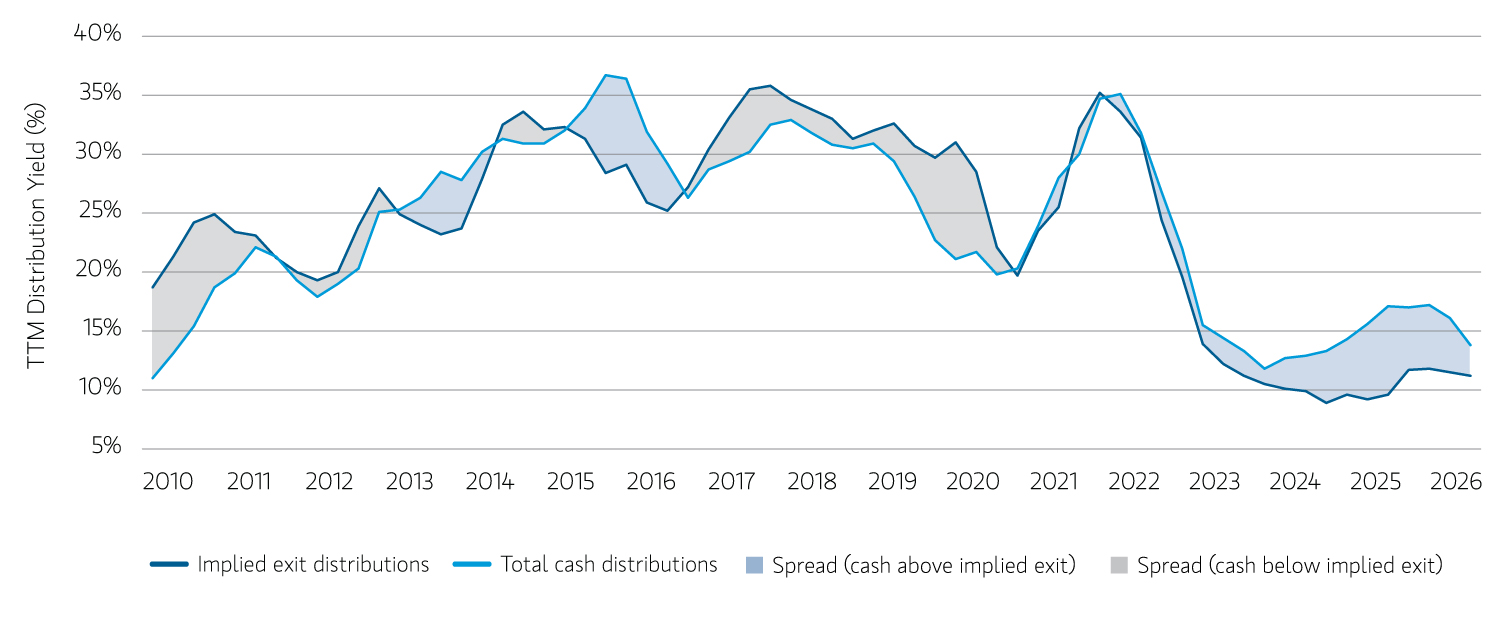
Given the muted transaction and distribution environment previously discussed, sponsors have two options. They can wait for the market to improve and for “regular-way” exits to resume, or they can take an active approach to consistently delivering liquidity. The sponsors delivering top-quartile DPI are generally taking the latter approach, constantly finding ways to return cash to their investors using a full set of tools.
The most important and impactful tool for driving DPI remains the traditional full exit at a strong MOIC. Regardless of the broader economic backdrop, sponsors who can invest at fair entry valuations, generate underlying earnings growth, and build an attractive platform should continue to exit in a timely manner and at a premium valuation. Upper middle market and large cap sponsors continue to raise ever-larger funds, and we believe the buyer universe for high-quality middle market assets remains strong.
Beyond traditional exits, a broad suite of options has emerged over the last decade. Continuation Vehicles (CVs) have moved from a one-off solution to a deep and liquid segment of the market, with GP-led secondary volume reaching record levels. Minority sales and other forms of structured liquidity allow sponsors to deliver partial monetization without giving up control of an asset that has further embedded upside, and dividends provide another interim liquidity tool for companies that are sub-optimally capitalized.
Used judiciously, we believe these different tools allow sponsors to return capital to their limited partners on a reasonable timeline while avoiding the value erosion that could occur from selling into an unconstructive market. In a market where limited partners have made DPI the key metric governing future fund commitments, sponsors who can generate consistent distributions should have an advantage in sustaining and growing their business.
Display 6: Spread Between Total Private Equity Cash Distributions and Implied Exit Distributions is Expanding, Suggesting Additional Liquidity Tools Are Being Utilized
Source: PitchBook, Morgan Stanley Investment Management. US only. As of March 31, 2026
Display 6: Spread Between Total Private Equity Cash Distributions and Implied Exit Distributions is Expanding, Suggesting Additional Liquidity Tools Are Being Utilized
Positioning for the Decade Ahead
In our view, none of these five imperatives will drive strong returns in isolation; executing across all of them is what separates top-quartile managers from the pack.
A middle market sponsor without subsector expertise risks being outbid by those who have it. A sponsor without proprietary sourcing capabilities will more often pay market-clearing prices, and one without a defined and proven value creation playbook may face greater difficulty generating the earnings growth required to deliver acceptable returns at those prices. Finally, and perhaps most importantly for managers, a sponsor that cannot consistently return capital to investors is likely to face increasing difficulty raising the next fund.
Looking ahead, we expect continued dispersion in middle market private equity fund performance. Our view is that sponsors who cannot execute across these five imperatives will face real challenges in maintaining their returns, while those who can are likely to outperform For managers that have invested in building these capabilities, we believe that a more demanding economic environment may actually create a favorable backdrop, as it may create greater differentiation between managers who can drive true alpha and those who have been primarily riding a favorable market tailwind.
Vorgestellte Einblicke





IMPORTANT INFORMATION
There is no guarantee that any investment strategy will work under all market conditions, and each investor should evaluate their ability to invest for the long-term, especially during periods of downturn in the market.
The views and opinions and/or analysis expressed are those of the author or the investment team as of the date of preparation of this material and are subject to change at any time without notice due to market or economic conditions and may not necessarily come to pass. Furthermore, the views will not be updated or otherwise revised to reflect information that subsequently becomes available or circumstances existing, or changes occurring, after the date of publication. The views expressed do not reflect the opinions of all investment personnel at Morgan Stanley Investment Management (MSIM) and its subsidiaries and affiliates (collectively “the Firm”), and may not be reflected in all the strategies and products that the Firm offers.
Forecasts and/or estimates provided herein are subject to change and may not actually come to pass. Information regarding expected market returns and market outlooks is based on the research, analysis and opinions of the authors or the investment team. These conclusions are speculative in nature, may not come to pass and are not intended to predict the future performance of any specific strategy or product the Firm offers. Future results may differ significantly depending on factors such as changes in securities or financial markets or general economic conditions.
Alternative investments are speculative and include a high degree of risk. Investors could lose all or a substantial amount of their investment. Alternative investments are suitable only for long-term investors willing to forego liquidity and put capital at risk for an indefinite period of time. Alternative investments are typically highly illiquid – there is no secondary market for private funds, and there may be restrictions on redemptions or assigning or otherwise transferring investments into private funds. Alternative investment funds often engage in leverage and other speculative practices that may increase volatility and risk of loss. Alternative investments typically have higher fees and expenses than other investment vehicles, and such fees and expenses will lower returns achieved by investors.
This material has been prepared on the basis of publicly available information, internally developed data and other third-party sources believed to be reliable. However, no assurances are provided regarding the reliability of such information and the Firm has not sought to independently verify information taken from public and third-party sources.
This material is for the benefit of persons whom the Firm reasonably believes it is permitted to communicate to and should not be forwarded to any other person without the consent of the Firm. It is not addressed to any other person and may not be used by them for any purpose whatsoever. It expresses no views as to the suitability of the investments described herein to the individual circumstances of any recipient or otherwise. It is the responsibility of every person reading this material to fully observe the laws of any relevant country, including obtaining any governmental or other consent which may be required or observing any other formality which needs to be observed in that country.
This material is a general communication, which is not impartial and all information provided has been prepared solely for informational and educational purposes and does not constitute an offer or a recommendation to buy or sell any particular security or to adopt any specific investment strategy. The information herein has not been based on a consideration of any individual investor circumstances and is not investment advice, nor should it be construed in any way as tax, accounting, legal or regulatory advice. To that end, investors should seek independent legal and financial advice, including advice as to tax consequences, before making any investment decision.
Any charts and graphs provided are for illustrative purposes only.
Any performance quoted represents past performance. Past performance does not guarantee future results.
The indexes are unmanaged and do not include any expenses, fees or sales charges. It is not possible to invest directly in an index.
This material is not a product of Morgan Stanley’s Research Department and should not be regarded as a research material or a recommendation.
The Firm has not authorised financial intermediaries to use and to distribute this material, unless such use and distribution is made in accordance with applicable law and regulation. Additionally, financial intermediaries are required to satisfy themselves that the information in this material is appropriate for any person to whom they provide this material in view of that person’s circumstances and purpose. The Firm shall not be liable for, and accepts no liability for, the use or misuse of this material by any such financial intermediary.
This material may be translated into other languages. Where such a translation is made this English version remains definitive. If there are any discrepancies between the English version and any version of this material in another language, the English version shall prevail.
The whole or any part of this material may not be directly or indirectly reproduced, copied, modified, used to create a derivative work, performed, displayed, published, posted, licensed, framed, distributed or transmitted or any of its contents disclosed to third parties without the Firm’s express written consent. This material may not be linked to unless such hyperlink is for personal and non-commercial use. All information contained herein is proprietary and is protected under copyright and other applicable law.
Morgan Stanley Investment Management is the asset management division of Morgan Stanley.
DISTRIBUTION
This material is only intended for and will only be distributed to persons resident in jurisdictions where such distribution or availability would not be contrary to local laws or regulations.
MSIM, the asset management division of Morgan Stanley (NYSE: MS), and its affiliates have arrangements in place to market each other’s products and services. Each MSIM affiliate is regulated as appropriate in the jurisdiction it operates. MSIM’s affiliates are: Calvert Research and Management, Eaton Vance Management, Parametric Portfolio Associates LLC, Parametric SAS, and Atlanta Capital Management LLC.
This material has been issued by any one or more of the following entities:
EMEA
This material is for Professional Clients/Accredited Investors only.
In the EU, MSIM materials are issued by MSIM Fund Management (Ireland) Limited (“FMIL”). FMIL is regulated by the Central Bank of Ireland and is incorporated in Ireland as a private company limited by shares with company registration number 616661 and has its registered address at 24-26 City Quay, Dublin 2, DO2 NY19, Ireland.
Outside the EU, MSIM materials are issued by Morgan Stanley Investment Management Limited (MSIM Ltd) is authorised and regulated by the Financial Conduct Authority. Registered in England. Registered No. 1981121. Registered Office: 25 Cabot Square, Canary Wharf, London E14 4QA.
In Switzerland, MSIM materials are issued by Morgan Stanley & Co. International plc, London (Zurich Branch) Authorised and regulated by the Eidgenössische Finanzmarktaufsicht ("FINMA"). Registered Office: Beethovenstrasse 33, 8002 Zurich, Switzerland.
Italy: MSIM FMIL (Milan Branch), (Sede Secondaria di Milano) Palazzo Serbelloni Corso Venezia, 16 20121 Milano, Italy. The Netherlands: MSIM FMIL (Amsterdam Branch), Rembrandt Tower, 11th Floor Amstelplein 1 1096HA, Netherlands. France: MSIM FMIL (Paris Branch), 61 rue de Monceau 75008 Paris, France. Spain: MSIM FMIL (Madrid Branch), Calle Serrano 55, 28006, Madrid, Spain. Germany: MSIM FMIL Frankfurt Branch, Große Gallusstraße 18, 60312 Frankfurt am Main, Germany (Gattung: Zweigniederlassung (FDI) gem. § 53b KWG). Denmark: MSIM FMIL (Copenhagen Branch), Gorrissen Federspiel, Axel Towers, Axeltorv2, 1609 Copenhagen V, Denmark.
MIDDLE EAST
Dubai International Financial Centre: This information does not constitute or form part of any offer to issue or sell, or any solicitation of any offer to subscribe for or purchase, any securities or investment products in the UAE (including the Dubai International Financial Centre and the Abu Dhabi Global Market) and accordingly should not be construed as such. Furthermore, this information is being made available on the basis that the recipient acknowledges and understands that the entities and securities to which it may relate have not been approved, licensed by or registered with the UAE Central Bank, the Dubai Financial Services Authority, the UAE Securities and Commodities Authority, the Financial Services Regulatory Authority or any other relevant licensing authority or government agency in the UAE. The content of this report has not been approved by or filed with the UAE Central Bank, the Dubai Financial Services Authority, the UAE Securities and Commodities Authority or the Financial Services Regulatory Authority.
Abu Dhabi Global Market ("ADGM"): This material is sent strictly within the context of, and constitutes, an Exempt Communication. This material relates to Capital Partners which is not subject to any form of regulation or approval by the Financial Services Regulatory Authority of the Abu Dhabi Global Market (the “FSRA”).
Saudi Arabia
This financial promotion was issued and approved for use in Saudi Arabia by Morgan Stanley Saudi Arabia, Al Rashid Tower, Kings Sand Street, Riyadh, Saudi Arabia, authorized and regulated by the Capital Market Authority license number 06044-37.
U.S.
NOT FDIC INSURED | OFFER NO BANK GUARANTEE | MAY LOSE VALUE | NOT INSURED BY ANY FEDERAL GOVERNMENT AGENCY | NOT A DEPOSIT
Latin America (Brazil, Chile Colombia, Mexico, Peru, and Uruguay)
This material is for use with an institutional investor or a qualified investor only. All information contained herein is confidential and is for the exclusive use and review of the intended addressee, and may not be passed on to any third party. This material is provided for informational purposes only and does not constitute a public offering, solicitation or recommendation to buy or sell for any product, service, security and/or strategy. A decision to invest should only be made after reading the strategy documentation and conducting in-depth and independent due diligence.
ASIA PACIFIC
Hong Kong: This document has been issued by Morgan Stanley Asia Limited, CE No. AAD291, for use in Hong Kong and shall only be made available to “professional investors” as defined under the Securities and Futures Ordinance of Hong Kong (Cap 571). The contents of this document have not been reviewed nor approved by any regulatory authority including the Securities and Futures Commission in Hong Kong. Accordingly, save where an exemption is available under the relevant law, this document shall not be issued, circulated, distributed, directed at, or made available to, the public in Hong Kong. Singapore: This material is disseminated in Singapore by Morgan Stanley Investment Management Company, Registration No. 199002743C. This material should not be considered to be the subject of an invitation for subscription or purchase, whether directly or indirectly, to the public or any member of the public i/n Singapore other than (i) to an institutional investor under section 304 of the Securities and Futures Act, Chapter 289 of Singapore (“SFA”), (ii) to a “relevant person” (which includes an accredited investor) pursuant to section 305 of the SFA, and such distribution is in accordance with the conditions specified in section 305 of the SFA; or (iii) otherwise pursuant to, and in accordance with the conditions of, any other applicable provision of the SFA. This material has not been reviewed by the Monetary Authority of Singapore. Australia: This material is provided by Morgan Stanley Investment Management (Australia) Pty Ltd ABN 22122040037, AFSL No. 314182 and its affiliates and does not constitute an offer of interests. Morgan Stanley Investment Management (Australia) Pty Limited arranges for MSIM affiliates to provide financial services to Australian wholesale clients. This material will not be lodged with the Australian Securities and Investments Commission.
Japan
For professional investors, this material is circulated or distributed solely for informational purposes. For non-professional investors, this material is provided in connection with Morgan Stanley Investment Management (Japan) Co., Ltd. (“MSIMJ”)’s business with respect to discretionary investment management agreements (“IMA”) and investment advisory agreements (“IAA”). This does not constitute a recommendation or solicitation of transactions nor offers any particular financial instruments. Under an IMA, with respect to the management of client assets, the client prescribes basic management policies in advance and commissions MSIMJ to make all investment decisions based on an analysis of the value, etc. of the securities, and MSIMJ accepts such commission. The client shall delegate to MSIMJ the authorities necessary to make such investment decisions. MSIMJ exercises these delegated authorities accordingly, and the client shall not make individual instructions. All investment profits and losses belong to the clients; principal is not guaranteed. Please consider the investment objectives and nature of risks before investing. As an investment advisory fee for an IAA or an IMA, the amount of assets subject to the contract multiplied by a certain rate (the upper limit is 2.20% per annum (including tax)) shall be incurred in proportion to the contract period. For some strategies, a contingency fee may be incurred in addition to the fee mentioned above. Indirect charges also may be incurred, such as brokerage commissions for underlying securities. Since these charges and expenses vary by contract and other factors, MSIMJ cannot present the rates, upper limits, etc. in advance. All clients should read thoroughly the Documents Provided Prior to the Conclusion of a Contract carefully before executing an agreement. This material is distributed in Japan by MSIMJ, Registered No. 410 (Director of Kanto Local Finance Bureau (Financial Instruments Firms)), Membership: the Japan Securities Dealers Association, the Investment Management Association of Japan and the Type II Financial Instruments Firms Association.


