


 Top
Top


Since their first U.S. listing in 1993, exchange-traded funds (ETFs) have transformed from a clever financial novelty to one of the most popular investment vehicles in modern capital markets. Early growth and mass use of ETFs emerged in equity markets, primarily in passive strategies that mirrored the S&P 500 Index or other broad equity benchmarks. With the rise of passive equity ETFs, coupled with the emergence of ETFs into other asset classes including fixed income, investors began embracing passive ETFs for their municipal bond exposure. But given the differences in the underlying securities and unique market dynamics in the equity and municipal markets, investors began to realize that many of the advantages of passive equity strategies are not realized for passive municipal offerings. As a result, active municipal ETFs have become more popular over the last several years because they can provide benefits unavailable from passive ETFs.
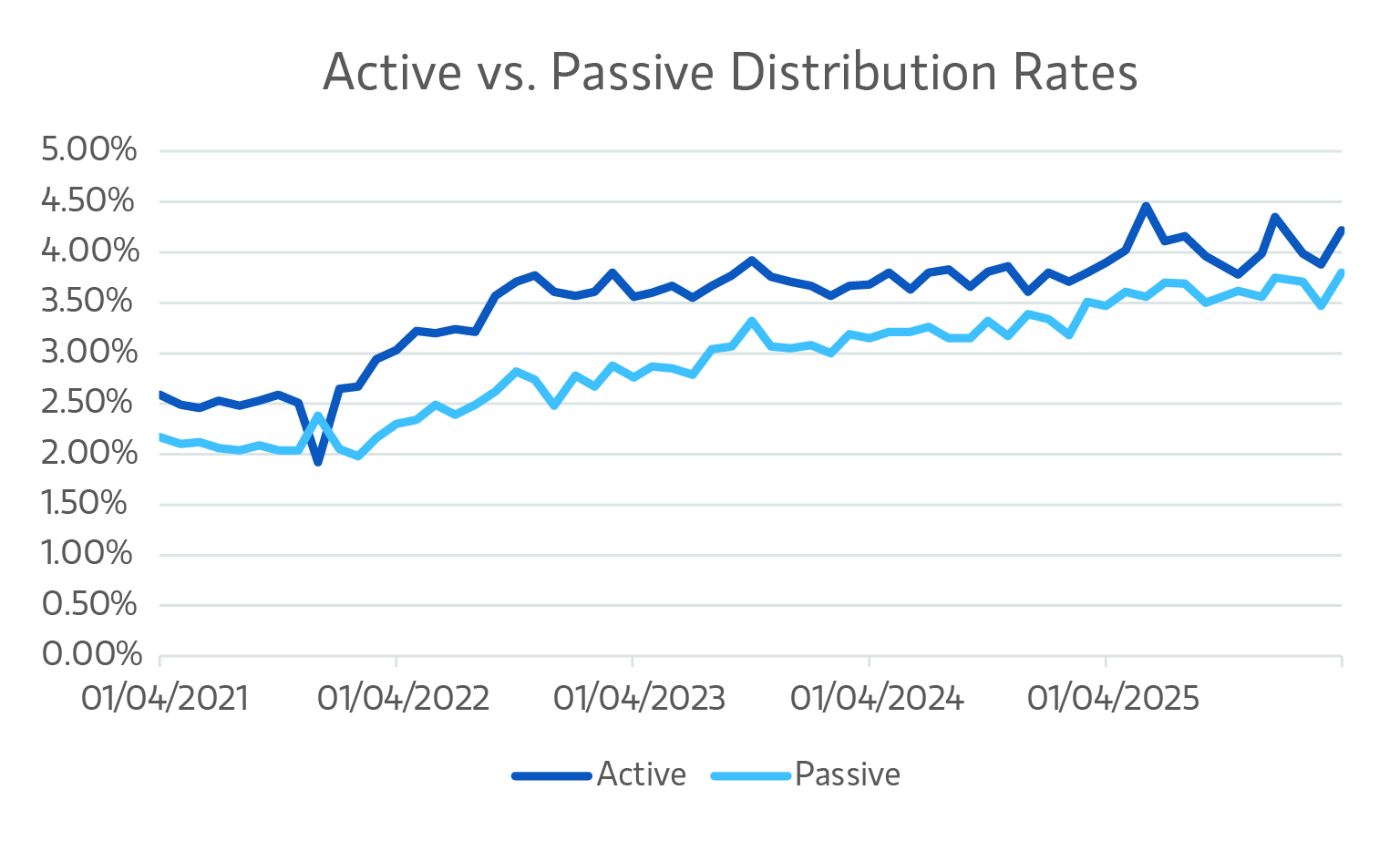
Downsides of Passive Municipal ETFs
- Challenges to Index Replication: The number of issues within the municipal bond index and infrequent trading of many constituents post initial issuance, may hinder close replication of index exposure. Existing passive offerings may not always achieve index replication and low tracking error, which are major selling points for passive equity ETFs.
- Less Credit Oversight: Compared to active managers, passive municipal strategies may focus less on credit fundamentals or outlook when purchasing securities for their portfolios. A passive mandate to purchase only requires inclusion in the index and meeting certain criteria. This method of investing increases the chances of overlooking signs of potential downgrade or default risk of portfolio holdings, while also ignoring potential credit opportunities.
- No Positioning for Seasonality: Periods of strong or weak market technicals are typically major drivers of municipal performance. This seasonality is driven by several factors, including fund flows, reinvestment capital and primary market issuance. While active managers may seek to position their portfolios accordingly to take advantage of these longer run trends, passive portfolios may have less flexibility to adapt and capitalize on these trends.
- Limited Ability to Rebook Yields: Fluctuation of interest rates over time creates opportunities for rebooking purchase yields at higher prevailing market levels. This in turn can be a leading contributor to higher dividend yields for active funds. In this scenario, active managers tend to place more focus on selling existing holdings and purchasing new securities with higher purchase yields. Passive managers, who are buy-and-hold investors, may be less proactive in rebooking into higher yields. Ultimately, this may contribute to a large difference in current income and total return between these two styles of portfolio management. Both 2022-2024 and the first three months in 2025 provided ample opportunity for rebooking yields.
- Excluded Sectors and Market Segments: Passive municipal ETFs tend to exclude several large market segments from their portfolios, including bonds subject to the alternative minimum tax (AMT) or sectors like housing, healthcare or pre-paid gas bonds. Therefore, passive municipal ETFs may not be giving investors true market exposure, as they do in equity markets, and passive portfolios do not invest in areas where active managers often find value.
"Passive ETFs have become a larger component of the equity world, but for fixed income, and in particular municipal bonds, we believe active management will remain beneficial across market cycles.”
Side Note: To be fair, simply choosing an active ETF does not guarantee outperformance for one’s municipal bond exposure. There are some potential downside by going active; active ETFs tend to have higher costs than their passive counterparts. There is also the risk the active manager may get market, duration, or sector calls incorrect. These downsides are not unique to the municipal bond market, but rather are characteristic of active investing in general. Investors must consider the pros and cons of each type of investing style when selecting the type of investment that is right for their circumstances.
Bottom line: Passive ETFs have become a larger component of the equity world, but for fixed income, and in particular municipal bonds, we believe active management will remain beneficial across market cycles. Furthermore, it is important to select an active manager for municipal bond exposure with a demonstrated track record of providing investors with the advantages that passive ETFs typically lack, such as credit oversight, positioning for seasonality, rebooking into higher book yields when possible and investing across the entirety of the municipal bond universe.
Featured Insights





Risk Considerations: There is no assurance that a portfolio will achieve its investment objective. Portfolios are subject to market risk, which is the possibility that the market values of securities owned by the portfolio will decline. Market values can change daily due to economic and other events (e.g. natural disasters, health crises, terrorism, conflicts and social unrest) that affect markets, countries, companies or governments. It is difficult to predict the timing, duration, and potential adverse effects (e.g. portfolio liquidity) of events. Accordingly, you can lose money investing. Fixed-income securities are subject to the ability of an issuer to make timely principal and interest payments (credit risk), changes in interest rates (interest-rate risk), the creditworthiness of the issuer and general market liquidity (market risk). In a rising interest-rate environment, bond prices may fall and may result in periods of volatility and increased portfolio redemptions. In a declining interest-rate environment, a portfolio may generate less income. Longer-term securities may be more sensitive to interest rate changes. By investing in municipal obligations, a Fund may be susceptible to political, economic, regulatory or other factors affecting their issuers. While interest earned on municipal securities is generally not subject to federal income tax, any interest earned on taxable municipal securities is fully taxable at the federal level and may be subject to state and/or local income tax. Taxability risk. Changes in tax laws or adverse determinations by the Internal Revenue Service (“IRS”) may make the income from some municipal obligations taxable.
The views and opinions and/or analysis expressed are those of the author or the investment team as of the date of preparation of this material and are subject to change at any time without notice due to market or economic conditions and may not necessarily come to pass. Furthermore, the views will not be updated or otherwise revised to reflect information that subsequently becomes available or circumstances existing, or changes occurring, after the date of publication. The views expressed do not reflect the opinions of all investment personnel at Morgan Stanley Investment Management (MSIM) and its subsidiaries and affiliates (collectively the Firm”) or the views of the firm as a whole, and may not be reflected in all the strategies and products that the Firm offers.
Forecasts and/or estimates provided herein are subject to change and may not actually come to pass. Information regarding expected market returns and market outlooks is based on the research, analysis and opinions of the authors or investment team. These conclusions are speculative in nature, may not come to pass and are not intended to predict the future performance of any specific strategy or product the Firm offers. Future results may differ significantly depending on factors such as changes in securities or financial markets or general economic conditions.
This material is a general communication, which is not impartial and all information provided has been prepared solely for informational and educational purposes and does not constitute an offer or a recommendation to buy or sell any particular security or to adopt any specific investment strategy. The information herein has not been based on a consideration of any individual investor circumstances and is not investment advice, nor should it be construed in any way as tax, accounting, legal or regulatory advice. To that end, investors should seek independent legal and financial advice, including advice as to tax consequences, before making any investment decision.
Past performance is no guarantee of future results.
Morgan Stanley Investment Management Incorporated is the adviser to the Eaton Vance ETFs. Eaton Vance ETFs are distributed by Foreside Fund Services, LLC.
Before investing in any Eaton Vance ETF, prospective investors should consider carefully the investment objective(s), risks, and charges and expenses. The current prospectus contains this and other information. To obtain a prospectus or summary prospectus, (which includes the applicable fund’s current fees and expenses, if different from those in effect as of the date of this material), download a copy at eatonvance.com or call 1 800 548 7786. Read the prospectus carefully before investing.


